

For the 12 months ended Dec 31, 2025, Centurion Corp’s earnings fell by 67% y-o-y to $114.8 million due to a lower fair value gain of $22.9 million on investment properties, compared to the exceptional fair value gain of $219.1 million in FY2024. The lower earnings were also attributed to the $50.8 million incurred from last year’s REIT spin-off.
Excluding the one-offs and lower fair value gains, net profit from core business operations rose by 26% y-o-y to $139.2 million this year.
Revenue grew 17% y-o-y to $295.9 million, driven by healthy rental revisions across markets and strong financial occupancy in Singapore and the UK.
As at Dec 31, 2025, Centurion’s cash and bank balances surged by 319% y-o-y to $373.1 million, part of which was from the gains received from the REIT spin-off, says the group.
See also: Centurion acquires 65% stake in 7 Kim Chuan Lane for $4.8 mil
The REIT achieved “three very important steps” for the group, which is “evolving [the group], transforming [it] into a new business model and growth model,” says David Phey, Centurion’s head of corporate communications at the briefing on March 2.
“We’re now able to recycle capital. We have successfully recycled capital to enable further growth of our AUM (assets under management) at scale, we have now established stable recurring fee income streams for the group, and we now have a long-term platform that allows continual recycling of assets and capital,” he adds.
As at Dec 31, 2025, CAREIT has $0.8 billion of AUM in its owned-and-operated assets arm, while it has $2.1 billion under its managed assets.
For the year, Centurion recommended a final dividend of 2 cents per share and a special distribution in specie of one CAREIT unit for every 10 Centurion shares.
Following the spin-off of the REIT, Centurion says it will continue to grow through three streams — operating income from its owned and operated assets, fee income from management services, and investment income from its stake in CAREIT. As at Dec 31, 2025, Centurion has a 42.9% stake in the REIT.
The dividend in specie is a “one-off”, says CEO Kong Chee Min, adding that the group will not be distributing any further units. The distribution of CAREIT’s units is also in line with the REIT’s IPO prospectus. In the prospectus, Centurion said it intended to hold 35% to 40% of the total number of units in issue following the dividend in specie. At the briefing, Kong said that the group’s stake in CAREIT will not fall below 30%.
Centurion, which previously announced plans to venture into the Middle East, will “pause and monitor” the situation for now.
In Singapore, the group will be “actively” participating in tenders for workers’ accommodation sites, given that it is their core business. However, the group is also practical in recognising bids that have gone too high, in their view.
Given the tight market supply, Kong foresees bed rents continuing to rise, thereby benefiting the group’s portfolio of about 37,000 beds.
Analysts mixed on target prices for Centurion
For more stories about where money flows, click here for Capital Section
Analysts from CGS International (CGSI), Maybank Securities and UOB Kay Hian are slightly mixed on Centurion’s prospects. However, all three houses have kept their respective “add” and “buy” calls after the group’s FY2025 results.
CGSI’s Tan Jie Hui and William Tng believe Centurion is “building a growth story”. However, they have lowered their target price to $1.84 from $2.05, reflecting an updated revalued net asset value (RNAV) that accounts for development risk in the group’s core portfolio.
“We apply a 30% discount to RNAV for Centurion’s core business, broadly in line with Singapore developers’ current P/RNAV of 0.7 times [to] 0.8 times,” write Tan and Tng.
The analysts have also lowered their FY2026 and FY2027 earnings per share (EPS) estimates by 31% and 27%, respectively, to “reflect projected growth contributions from CAREIT and Centurion [and] offset by higher non-controlling interests following CAREIT’s listing.”
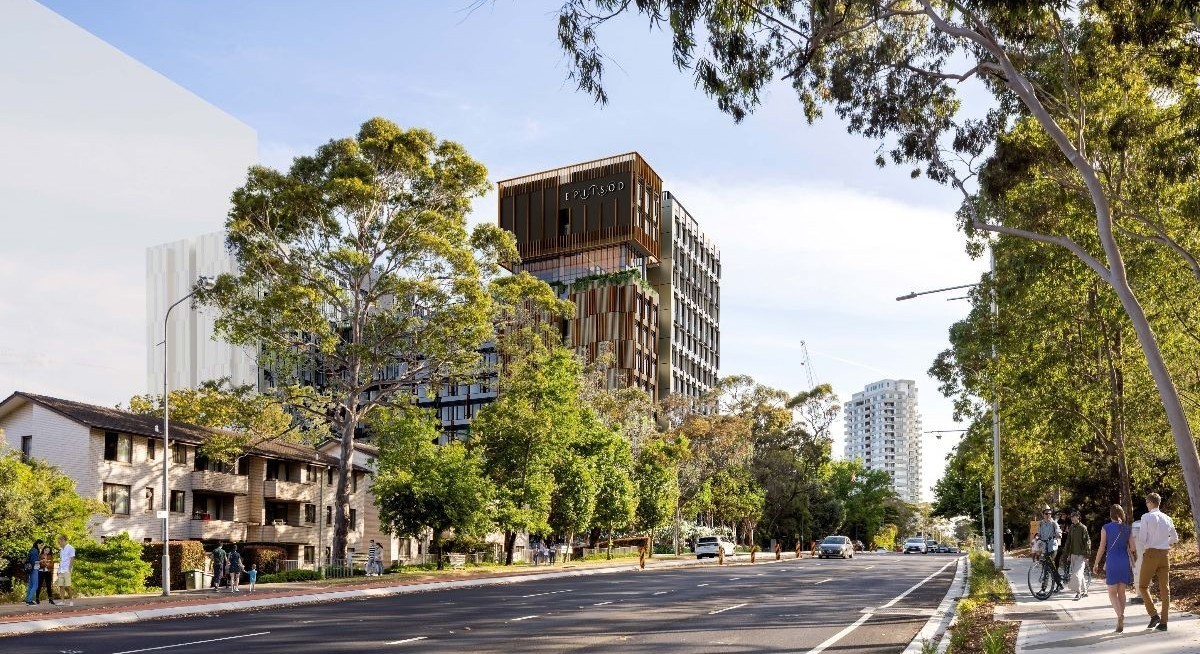
That said, they expect the group’s core net profit to grow at 7% per annum over FY2026 to FY2028 due to the ramp-up of new assets and ongoing developments. Key contributors include the new 1,764-bed Westlite Toh Guan block, the 3,696-bed Westlite Mandai block, the additional Westlite Ubi block with 540 beds expected by 4QFY2027 and Epiisod Macquarie Park completed in January this year via CAREIT.
Maybank Securities’ Eric Ong believes “the best is yet to come” for the group, given the group’s strong development pipeline.
“Looking ahead, Centurion is guiding for a healthy portfolio pipeline of multiple developments through selective AEIs (asset enhancement initiatives) for its PBWA assets and other living accommodation segments in new geographies,” Ong notes.
“This includes exploring development and/or acquisitions of existing, operational worker accommodations in the Middle East, as well as existing operational key worker accommodations catering to the mining industry in Australia. For now, we have not factored these potential upside into our forecasts,” adds the analyst, who has a higher target price of $1.68 from $1.52 previously.
Ong has also “tweaked” his FY2026 to FY2027 EPS to factor Centurion’s reduced stake in CAREIT, which will drop to around 37.9% following the dividend in specie, as well as higher non-controlling interest.
UOB Kay Hian’s Adrian Loh has maintained his target price of $1.90, which represents a target P/E multiple of 12.5 times or 1 standard deviation above the company’s long-term average P/E, excluding the Covid-19 years of 2019 to 2023.
“We believe that this target P/E multiple is undemanding given the company’s earnings growth over the next two years”, says Loh. “With expanding bed capacity, structurally undersupplied living sectors and improved leverage metrics, earnings visibility into FY2026–FY2027 appears strong, in our view.”
The analyst has increased his earnings estimates for FY2026 to FY2027 by 1% to 6% to account for the slightly higher rental reversions.
“We believe there is upside to our FY2027 numbers should a couple of its PBSA assets come online earlier than expected. In our view, the company’s operational momentum should remain strong in 2026 with high occupancies across the Singapore PBWA and UK PBSA portfolios, reinforcing earnings visibility following the strategic CAREIT capital recycling milestone,” Loh adds.
CAREIT surpasses expectations
Meanwhile, CAREIT delivered a stellar report card as its inaugural results surpassed its IPO estimates. Distribution per unit (DPU) came in at 1.739 cents, outperforming its forecast by 6.7%. Gross revenue also outperformed estimates by 3.4% at $50.7 million, while net property income (NPI) outperformed by 4.1% at $36.1 million.
The outperformance was driven by stronger-than-expected rental rates and occupancies across both asset classes. CAREIT’s PBWA portfolio saw rental rates increasing by 5% against the 3% forecast, while occupancy stood at 97.6%, above the expected rate of 95.8%. PBSA occupancy stood at 99.1% from 97.3%.
“We are glad to report this bonus, if I may use the word, to our investors,” said Tony Bin, CEO of the REIT manager, at the REIT’s results briefing on Feb 24. When asked if new supply coming into the market had weighed on rentals, “the short answer is no”, came the reply, citing the imbalance between demand and supply.
When asked about capex reserves for the upfront land premium, Bin noted that it is “still quite far away” for the REIT to consider. He notes that the nearest lease expiry is Westlite Woodlands; the PBWA is on a 30-year land lease from November 2013 and the group will come back to that sometime around three to four years before the lease expires.
Analysts keep ‘buy’ calls
Analysts from DBS Group Research and UOB Kay Hian have kept their “buy” calls. DBS’s Geraldine Wong has maintained her target price of $1.30 while UOB Kay Hian’s Adrian Loh has increased his target price estimate to $1.55 from $1.23.
Wong notes that CAREIT’s first set of results marked an “early beat” and captured sector tailwinds ahead of expectations.
“The magnitude of the beat paves the way for a sector-high DPU growth in FY2026, with low interest rates partially locked in and occupancy scaling up faster than expected,” she writes. “Delivery of bed growth also comes in faster than expected, with CAREIT not wasting time to scale up its footprint. This reflects the early commencement of Mandai expanded capacity (MEC) and earlier-than-anticipated build-up of Westlite Ubi carpark space, which is set to complete [around] end-2027.”
The completion of these developments will likely add a DPU accretion of 1.5% in FY2028, which is not yet priced in, says the analyst. She adds that the REIT may continue to see robust organic and inorganic growth.
“There remain further AEIs to unlock within the existing PBWA portfolio, which could come in the form of redevelopment to increase bed count, a viable growth lever for the longer-term horizon,” continues Wong. “For now, focus will be to ramp up occupancy for additional beds at TEC (Toh Guan expanded capacity) and MEC, and on the execution of Ubi carpark development.”
CAREIT continues to be Wong’s top pick within the mid-cap space given its industry-leading DPU growth, backed by a Singapore-centric portfolio,” she says. “We believe that share price is awaiting to catch the next wave of growth with EQDP (Equity Market Development Programme) fund in flow and potential EPRA NAREIT indexation post its first annual report,” she writes.
UOB Kay Hian’s Loh sees CAREIT’s bright outlook as “undimmed” with bullish demand and supply dynamics for its PBWA and PBSA segments in the near- to medium-term.
Beyond the better-than-expected forecasts, Loh likes CAREIT’s “solid” balance sheet, favourable demand and supply outlook for Singapore PBWAs, and the REIT’s UK and Australian PBSA segments.
Loh’s new target price is based on a dividend discount model using a required return of 8% and a terminal growth rate of 2.8%.
“We have used a FY2027 DPU given that CAREIT has two new PBWA assets in Singapore and one new PBSA asset in Australia that will ramp up during 2026 and are expected to reach full occupancy by 2027,” he writes. “At our target price of $1.55, CAREIT will deliver a 5% yield, which we view as realistic given that it has unique assets within the REIT sector and an especially strong competitive moat in Singapore.


