



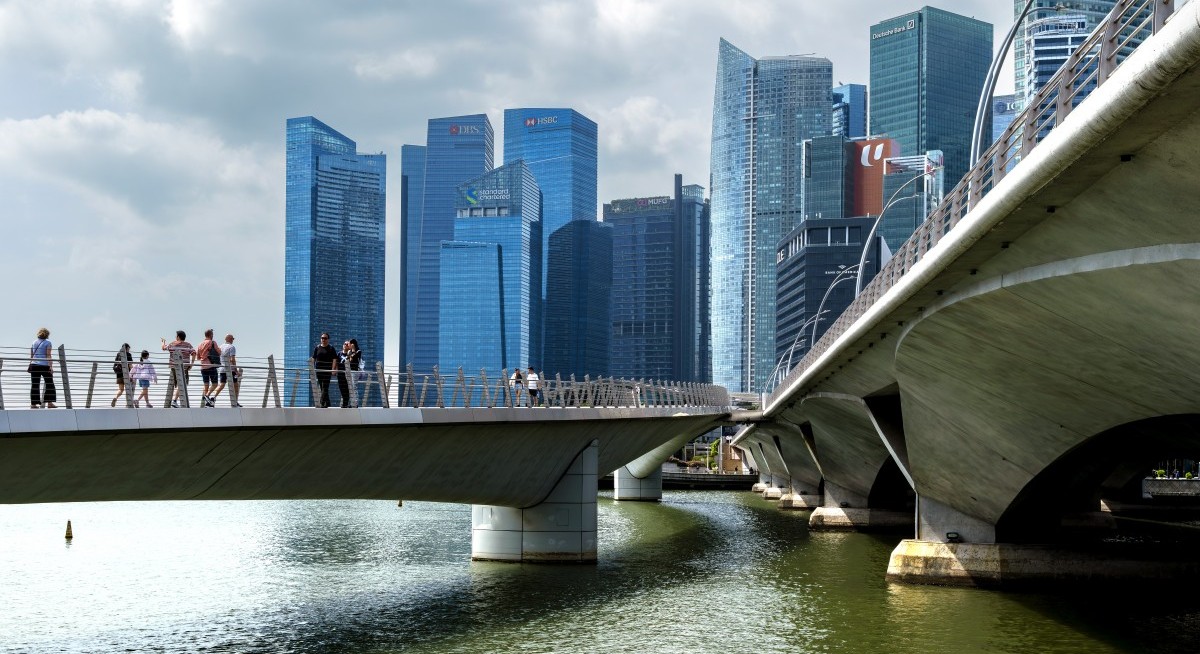



In 2015, very few investors would have believed that a Singapore CBD office building purchased for approximately $240 million could be transacted a decade later at $175 million.
Yet in February, 158 Cecil Street was sold for $175 million, translating to roughly $1,541 psf on its net lettable area. That is a $65 million capital reset over 10 years.
For many market participants, the number itself is striking. But the deeper significance lies not in the transaction price alone. It lies in what the transaction quietly reveals about how the market has evolved, and about the assumptions that investors have long held regarding Singapore’s commercial real estate.

158 Cecil Street (Photo: JLL)
For decades, the prevailing narrative around Singapore’s CBD office assets was relatively straightforward. The city was seen as one of the most stable and transparent real estate markets in the world. Institutional capital continued to flow in, demand from multinational tenants remained resilient and office assets in the CBD were widely regarded as defensive investments.
See also: Fewer GCB deals in 1H2026, but larger quantums lift average psf near record: PropNex
Within this narrative, a particular strategy gained popularity among investors. The formula was simple: acquire an older CBD office building, refurbish it, reposition the asset, hold it through the cycle and eventually exit at a higher valuation. Time, combined with refurbishment, was expected to gradually close the quality gap between older stock and institutional-grade buildings.
Enhancement was treated as a strategy; time was treated as protection. But markets evolve, and buildings age.
What the 158 Cecil Street transaction quietly demonstrates is that refurbishment alone does not necessarily resolve structural competitiveness. A refreshed facade, modernised interiors or upgraded mechanical systems can certainly improve the appearance and operational efficiency of a building. Yet those improvements do not alter the fundamental attributes that tenants and institutional investors ultimately prioritise.
See also: ‘Breathe life’ into precincts by investing in commercial property: Steward Asia
Office tenants today evaluate buildings through a far more functional lens than they did a decade ago. Floor plate efficiency, accessibility, drop-off convenience, natural light penetration, lift ratios and the overall workplace environment have become critical determinants of tenant demand. Corporate occupiers increasingly seek buildings that can support flexible workplace layouts, high employee density and a strong corporate image.
Older, Grade-B buildings often struggle in this regard. Many were designed during an era when office planning assumptions were very different. Narrow floor plates, limited parking ratios, constrained lobby spaces and the absence of proper drop-off areas create operational limitations that refurbishment alone cannot fully overcome.
Even after capital expenditure is deployed, these buildings remain structurally disadvantaged when compared to purpose-built Grade-A developments.
The result is not always an immediate loss of tenants. In many cases, such buildings continue to operate with reasonable occupancy levels. But the competitive gap gradually manifests through rental resilience.
When supply conditions tighten, Grade-B buildings may benefit from spillover demand. When supply expands, or tenant expectations rise, they become more vulnerable to rental pressure.
Rental resilience, in turn, underpins valuation support. When rental growth is constrained or volatile, the long-term capital appreciation of the asset becomes far less predictable. In such circumstances, valuation begins to depend more heavily on market sentiment and capital market conditions rather than on strong underlying fundamentals.
This is where the distinction between asset quality and location becomes important. Being located in the CBD has historically been viewed as a sufficient safeguard for long-term capital preservation.
Location remains critically important. However, location alone does not guarantee that a building will be immune from repricing when the quality differential between competing assets widens.
Over the past decade, Singapore has seen the introduction of several new-generation office developments that have significantly raised the benchmark for workplace quality. These buildings offer large, efficient floor plates, integrated amenities, strong public transport connectivity and architectural presence that appeals to both tenants and investors.
Against this backdrop, older office stock increasingly competes on price rather than on quality. For investors, the implications are significant. Freehold status, which is often highlighted as a key advantage of certain assets, does not automatically compensate for functional disadvantages in building design.
A refreshed facade may improve visual appeal, but it does not transform a building into institutional-grade stock. Marketing narratives can enhance perception, but they cannot fully overcome structural limitations that sophisticated tenants and buyers recognise.
This does not mean that Grade-B office assets have no place within the investment landscape. On the contrary, they can present attractive opportunities when acquired at valuations that reflect their competitive positioning. In certain situations, such buildings may also carry redevelopment or strategic repositioning potential that justifies investment.
However, those scenarios require clear strategic intent and disciplined pricing. What becomes risky is when investors pay near-Grade-A valuations for structurally inferior buildings on the assumption that time alone will bridge the gap. Real estate cycles can be supportive for periods of time, but cycles cannot permanently erase fundamental differences in asset quality.
Commercial real estate ultimately runs on exit liquidity. Investors may hold an asset for five or 10 years, but the true test of the investment often emerges at the point of exit. The critical question is not simply whether the building can generate income during the holding period. The more important question is who the next buyer will be, and whether that buyer will perceive the asset as strategically relevant within the evolving market landscape.
If institutional buyers hesitate five years from now, investors should hesitate today.
The $65 million adjustment observed in the 158 Cecil Street transaction should not necessarily be interpreted as a sign of structural weakness in Singapore’s office market. The city continues to remain one of Asia’s most stable and globally attractive commercial real estate destinations.
Rather, the transaction serves as a reminder of something more nuanced — asset quality is not merely a matter of aesthetics or branding; it is a form of risk management. Buildings that align with the functional expectations of tenants and the acquisition criteria of institutional investors tend to enjoy deeper liquidity, stronger rental resilience and more durable valuations.
In contrast, assets that rely primarily on location and time to deliver appreciation may find that the market eventually reassesses their position.
Real estate markets rarely adjust through dramatic moments. More often, they evolve quietly through transactions that recalibrate expectations.
Sometimes, a single number can capture that shift. In this case, the number is $65 million.
Navin Bafna is a senior associate division director at PropNex

For more property views and breaking news, visit City & Country’s microsite at theedgesingapore.com/cityandcountry




