



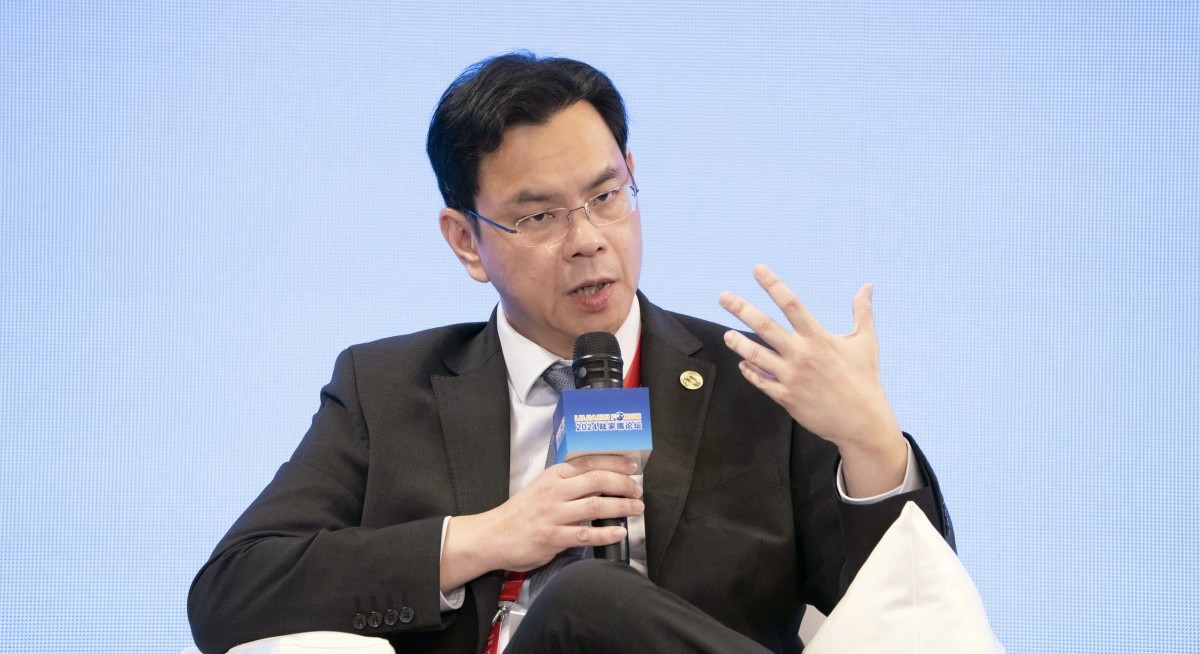



The AI boom might be huge economic growth driver but its return on investment remains unclear, says Chia Der Jiun, the managing director of the Monetary Authority of Singapore (MAS).
Chia was delivering his opening remarks at the Lujiazui Forum held in Shanghai on June 17, 2026. The annual event is focused on the financial and banking sector. This year’s forum features representatives from China’s financial regulatory bodies like the People's Bank of China and the National Financial Regulatory Administration, as well as the MAS and the Hungarian National Bank.
“Global economic growth and equity market valuations are highly reliant on AI, and could slow sharply or reverse if investment assumptions are reassessed,” Chia says of AI while flagging the technology as one of the many risks that are building up within the global economy.
“The returns on investments in AI are uncertain, while the costs of energy and chips have been climbing,” Chia continues. “The use of AI in the medium term also poses many uncertainties. Risks can accumulate if safety is not sufficiently safeguarded and economic benefits are not widely shared.”
AI has been a bright spot for a global economy that has been beset by the energy shock from the Iran War. Tech giants such as Meta and Alphabet have continued to invest heavily in their AI infrastructure. Meta says it expects to spend up to US$135 billion ($173 billion) on AI this year, nearly double the US$72 billion it spent last year. On June 2, Alphabet, Google’s parent company, raised US$84.75 billion in equity capital, the largest secondary offering in history, to fund its AI investments.
Sceptics, however, have questioned the sustainability of the AI investment wave given how its returns on productivity and cost have yet to materialise. In April, Uber’s chief technology officer Praveen Neppalli Naga told The Information that his staff had used up their entire annual AI budget within four months. The company has since introduced an employee usage cap of US$1,500 a month in AI token spending per AI tool, according to a report from Bloomberg on June 3.
See also: ByteDance, Alibaba pull AI companions as Beijing tightens rules
AI has been a core focus for Singapore’s government. In February, Prime Minister and Finance Minister Lawrence Wong announced that he would chair a newly set up National AI Council to provide strategic direction and guidance on the city-state’s AI agenda.
“AI is advancing at remarkable speed. We are reaching a stage where systems can write their own code and improve through iterative learning,” Wong said in his Budget speech on Feb 12, 2026.
“But with this promise comes deep, deep concerns. Workers worry that AI will displace jobs. Societies worry about misinformation, bias, and the ethical use of powerful technologies. These anxieties are real, and we must confront them squarely.”




