



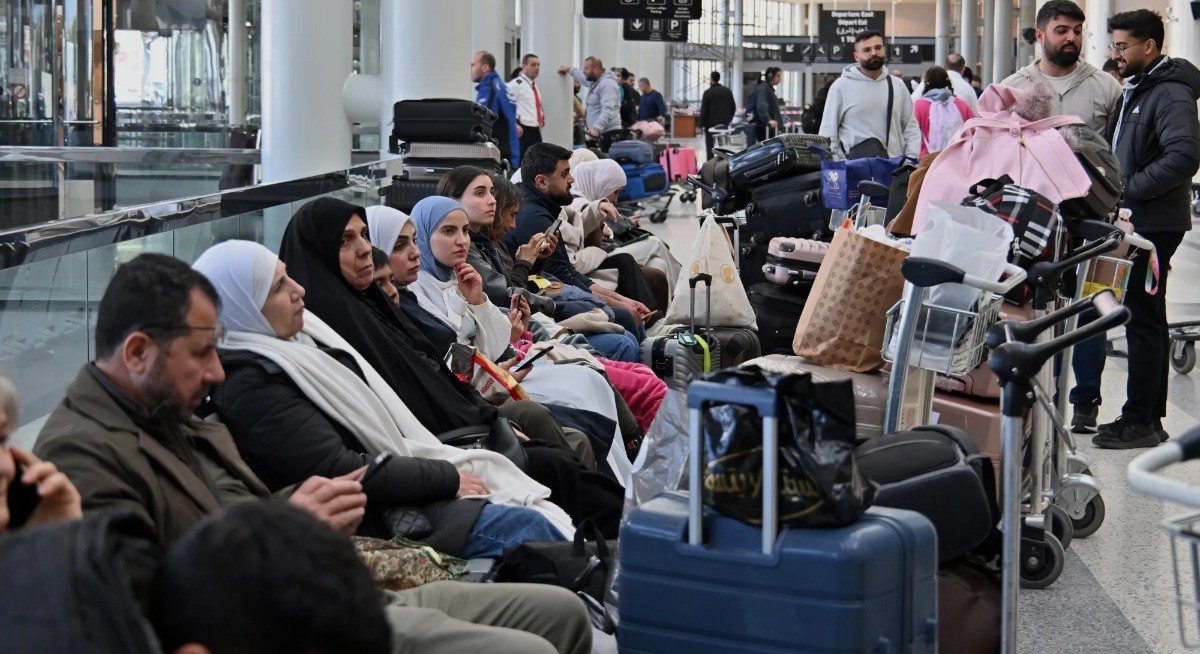


(March 1): Thousands of flights have been disrupted in the wake of the escalating conflict engulfing the Middle East, with Dubai’s main airport — the world’s busiest aviation hub — effectively shut down after it was hit by a suspected aerial strike.
There have been more than 2,300 flight cancellations from Bahrain to Tel Aviv in the past day, with more than 90% of departures from Dubai International Airport being scrapped, according to FlightAware data. Dubai had the most disruptions but flights to and from Doha and Abu Dhabi were also heavily affected, according to the data.
Hundreds of thousands of people have been stranded as the region functions as a global superconnector, linking any two points on the planet with one single stop in airports like Dubai, Doha or Abu Dhabi. That’s helped carriers including Emirates, Qatar Airways and Etihad to create massive fleets that funnel passengers through their hubs, turning the Middle East into a vital artery for global air-traffic flows.
Though the Persian Gulf has become accustomed to disruptions as the skies over large swaths of the Middle East suffered restrictions several times during the past two years, an outright suspension for many hours on a massive regional scale is unprecedented, highlighting the stakes in the conflict that’s pitting Iran against Israel and the US.
Emirates extended flight cancellations into Sunday morning, while Qatar Airways said operations are suspended until further notice, with updates planned for later. Etihad Airways said on Saturday that it will maintain the suspension at least until Sunday afternoon.
Elsewhere, India’s civil aviation authority said that local carriers cancelled 410 flights on Saturday and 444 are expected to be cancelled on Sunday.
See also: Airbus slams Pratt & Whitney for holding back output plans
With major Middle East Airports unable to give a definitive timeline of when they will resume operations, travel uncertainty is set to grow across the globe.
Uploaded by Liza Shireen Koshy




