






(July 14): China’s economic growth is expected to have weakened as of the mid-year mark, once again stoking questions about whether policymakers will accelerate government spending to ensure they meet their annual target.
Economists see the government on Wednesday reporting a 4.5% gain in gross domestic product (GDP) for the second quarter, according to the median forecast in a Bloomberg survey. That would be down from the 5% year-on-year increase in the first three months of the year, and leave growth skirting the bottom of Beijing’s 2026 target range of 4.5% to 5%.
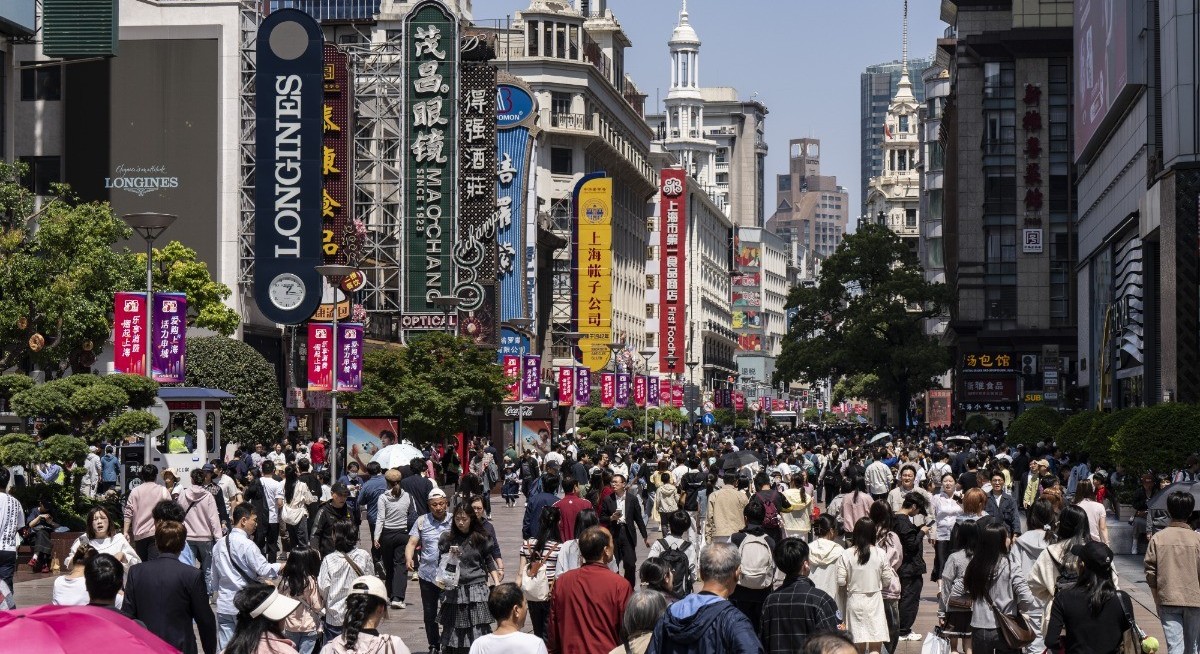
The slowdown reflects persistently weak consumer spending, a continuing slump in the housing market and declines in investment outside of favoured areas such as high-tech manufacturing. On a quarterly basis, growth is projected to moderate to 0.9%, which would be the lowest since 2023.
Whether the figures prove concerning enough to President Xi Jinping and his team remains to be seen. Exports have proven resilient to both overseas trade protectionism and the Middle East war, and China’s manufacturers are among the beneficiaries of the global artificial intelligence (AI) boom. One option would be to bring forward outlays pencilled in for later in the year.
“There could be increased urgency to deploy the funds already approved for this year, but we aren’t expecting new approvals yet,” Lynn Song, the chief greater China economist of ING Bank NV, wrote in a note ahead of the data.

See also: Innolight is said near approval for US$7 bil Hong Kong listing
Still, Premier Li Qiang, in a meeting with experts and entrepreneurs on Monday, did not rule out the potential for fresh measures. This month’s expected gathering of the ruling Communist Party’s top decision-making body, the Politburo, may provide more clues on what steps are in the pipeline.
Along with the quarterly GDP release, the National Bureau of Statistics will be reporting key economic indicators for June. Here’s what economists expect from the figures due at 10am on Wednesday:
Investment drop
See also: ‘Bad inflation’ ends China’s record streak of price declines
China’s decline in fixed-asset investment is seen deepening to 5% for January-June compared with the same period a year before. That’s worse than the 4.1% drop in the first five months of the year and would mark a new low since the 2020 pandemic. The fall in real estate investment is forecast to accelerate to 16.8%.
Looking at June alone, Goldman Sachs Group Inc economists predict an 8.3% decline compared with the same month last year, with adverse weather conditions among the factors weighing on the figure. Still, that would mark a slight improvement from a 10.6% slide in May.
Fiscal tightening, with the first narrowing of the broad budget deficit in more than two years, is expected to have had an impact. Local authorities prioritised reducing debt risks over infrastructure investment, while slumping land sales revenue and tighter requirements on project quality also tempered their appetite to spend.
Public spending is broadly expected to pick up steam going forward. Both the issuance of special local bonds and the use of a quasi-fiscal policy bank financing tool may expedite funding for infrastructure, with some major national projects under China’s new five-year plan getting launched.
Fiscal measures will likely “lend a helping hand in the second half” of 2026, economists at Australia and New Zealand Banking Group including Zhaopeng Xing wrote in a July 10 note.

The implementation of the 800 billion yuan (US$118 billion or $153 billion) new policy financing facility could be a focus of this month’s Politburo meeting, they said. The economists maintained their GDP projection of a 4.8% gain for both the second half and full year of 2026.
To stay ahead of Singapore and the region’s corporate and economic trends, click here for Latest Section
“Growth likely hit the bottom in the second quarter,” Huachuang Securities Co economist Zhang Yu wrote in a note, citing easing oil drags on production, lower year-ago comparison base for consumption, and slower investment declines as some factors supporting a rebound.
Consumption retreat
Retail sales likely edged down 0.1% in June from a year earlier, according to economists’ forecast, after falling 0.6% in May — the first decline since 2022.
Last month’s improvement was partly due to reduced pressure from oil prices, which gave consumers more firepower to use in areas such as travel, according to Changjiang Securities Co analysts including Song Xiaoxiao. Writing in a note earlier this month, they said declines in home-appliance sales also narrowed during the annual “618” midyear online shopping festival.
Spending continues to feel the drag of a “payback effect” from China’s consumer goods trade-in programme — which featured government subsidies to encourage shopping. Passenger vehicle sales in the country tumbled 23.2% year-on-year last month, the seventh consecutive month of double-digit declines.
An increase in a gauge of consumer confidence in May still left it at the second-lowest reading this year. Poor sentiment means factories are finding it hard to pass higher costs from oil, chips and metals along to consumers — putting corporate profitability under pressure and threatening the country’s reflation outlook.
Industrial output
Industrial production is projected to increase 4.6% year-on-year in June, a tad faster than a 4.5% rise the previous month.

The global AI spending spree is giving an additional lift to China’s exports this year, underpinning resilient factory activity but also worsening the divergence among the economy’s different sectors.
High-tech has seen production growing at rates more than twice as fast as that of overall manufacturing, with computer, telecommunications and other electronic equipment leading gains.
A split in fortunes in companies’ bottom lines has been striking. Earnings at producers of electronics and non-ferrous metals — including the copper and aluminium in high demand thanks to AI and renewable energy — both more than doubled in January-through-May from a year earlier. By contrast, profits at makers of furniture and ferrous metals, which include steel, slumped at least 37% during the period.
“Could we see this divergence narrow in the second half of the year?” ING’s Song wrote, referring to the gaps between foreign and domestic demand, and between China’s emerging and traditional economies. “The answer likely depends on whether policymakers can stabilise domestic demand and find a bottom for the property market.”
Uploaded by Tham Yek Lee




