
Floating Button
Home News Environmental, Social and Governance

GDI launches with ambition to shape Asean governance

Kwan Wei Kevin Tan and Felicia Tan
Kwan Wei Kevin Tan and Felicia Tan • 9 min read
GDI launches with ambition to shape Asean governance
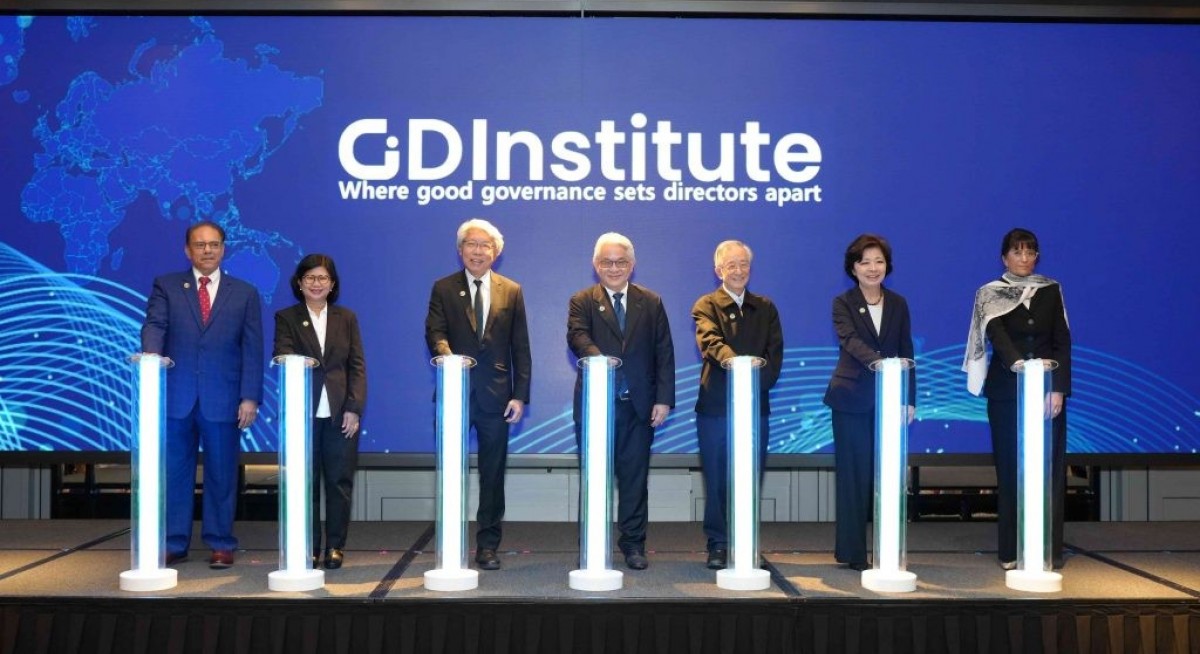
There’s room for more than one director’s body in Singapore, says GDI founder Mak Yuen Teen (centre). Photo: GDI
Font Resizer
Share to Whatsapp
Share to Facebook
Share to LinkedIn
Scroll to top
Follow us on Facebook and join our Telegram channel for the latest updates.

The newly launched corporate governance body GDInstitute (GDI) may be only months old, but founder Mak Yuen Teen says the idea for the non-profit goes back decades.

“Actually, 20 years ago, there were a few directors who approached me and said they had some unhappiness with the existing director’s body, [the Singapore Institute of Directors (SID)],” Mak tells The Edge Singapore. “Then they asked me, ‘Can we work together and form an alternative director’s body?’”

Mak says he turned down the request at the time, even though he shared some of the same frustrations with SID. The National University of Singapore (NUS) accounting professor served on SID’s governing council from 2000 to 2005 before resigning from both his council role and fellow membership. Since leaving, Mak has become a frequent critic of the organisation.

He says: “I said, ‘Let’s give SID more time. Let it improve.’ But after a long time, people have approached me again, and I think you reach a stage where you kind of say, ‘Why should Singapore only have one director’s body?’”

SID needs its own ‘board coup’

Mak first publicly floated the idea of an alternative to SID last year. In a blog post on March 18, 2025, he criticised the rushed appointment of two new directors to the City Developments (CDL) board the previous month. One of the appointees, Wong Su Yen, is an SID fellow and served as SID’s chair from 2020 to 2023. She continues to sit on CDL’s board.

See also: Trump summons Amazon, Google, Meta to sign power-cost pledge

According to Mak, the two new appointments did not comply with the best practices recommended in the SID’s Nominating Committee guide, which puts the organisation in a “poor light.”

“Perhaps SID needs its own ‘board coup’ to overhaul its council — or members can push for more significant changes in the council and governance. But maybe we need to start all over again,” writes Mak. Kwek Leng Beng, CDL’s executive chairman, had previously called the hasty board appointments an “attempted coup.”

GDI was launched just under a year later. On Jan 26, Mak officiated at the body's launch event at Four Seasons Singapore. GDI’s honorary adviser and former chair of the Economic Development Board, Philip Yeo, was also present. Notably, Yeo had been a long-time member of CDL’s board and had sided with Kwek Leng Beng in the dispute. He stepped down in July 2025 after 16 years on the board.

See also: Banks backing green steel fund ‘false solutions’ — report

GDI's board of directors — including former Bursa Malaysia chair Shireen Muhiudeen, former deputy commissioner at Indonesia’s Financial Services Authority Etty Retno Wulandari, First Resources independent director Mary Yeo and Zafar Momin, an independent director at Petronas Chemicals Group and adjunct professor at NUS Business School — were also present at the launch.

“Why should Singapore only have one director’s body? Malaysia has three. Vietnam, even though it’s an emerging frontier market, has two. Hong Kong has two. So it’s not unusual for markets to have more than one director’s body,” Mak says.

When asked about GDI’s formation, SID told The Edge Singapore that it looks forward to “working with any organisation that shares the same vision as us, to support all directors in the important work they do to uphold high standards of good governance.”

“While we welcome a spirit of collaboration, it is unfortunate when individuals or organisations attempt to build their own standing by diminishing the work and standing of others,” says SID. “Healthy debate is important for advancing governance, but it should be grounded in facts and conducted in a way that strengthens, rather than diminishes, the profession.”

No big backer behind GDI

Despite this regional network of advisors and board members, Mak says no major backer is funding their activities. “So there was this rumour spreading around that, Oh, somebody has a big cheque that they gave to us. This is not true. We want to be truly independent. There is no big donor behind,” he says.

Instead, GDI relies on funding from its membership fees. Pioneer members are asked to make a larger financial contribution, says Mak. GDI also plans to charge for the professional development courses and workshops it will offer in the future. GDI, however, will not chase growth for growth’s sake, Mak adds.

To stay ahead of Singapore and the region’s corporate and economic trends, click here for Latest Section

“We want to start with an organisation where people who join have strong ethical values, and a strong commitment to governance, whether it’s individuals or corporate,” says Mak. “We are not chasing large numbers.”

When asked about responses from local regulators, the Monetary Authority of Singapore and Singapore Exchange Regulation, Mak says they have been “supportive”.

GDI to go beyond ‘parochial’ approach

Instead of a “parochial” approach, GDI will open its doors to other governance professionals besides company directors. GDI’s name, Mak adds, implies that the group is looking at governance and directorships, and as such, he envisions having a community where company directors, the heads of internal audit, and risk management professionals can come together to exchange views.

Mak says GDI does not intend to act solely as a watchful critic. For example, if the body identifies good practices in how companies engage with investors, it will highlight them for praise.

“We wouldn’t comment about every single case, but there may be situations where we say, ‘Hey, based on good governance, this is what ought to be done.’ But we won’t do it for everyone,” Mak says, adding that GDI will focus its attention on companies whose actions could set a negative precedent or would likely affect a large number of people.

GDI is also aiming to expand regionally, building on Mak’s work in countries such as Malaysia, Vietnam and Brunei. The body already has a regional strategic committee exploring options in Malaysia, Indonesia and Vietnam, says Mak, who adds that countries can learn from one another when it comes to corporate governance. “I think the idea of GDI was… why shouldn’t we learn a bit more about other markets?”

The regional focus will be approached in a “respectful” manner. Rather than taking a top-down stance, Mak prefers a more collaborative process. “I think we can learn a bit from each other,” he says. “Malaysia has certain good practices that I think Singapore can do well to follow.”

In Malaysia, for instance, annual general meetings (AGMs) will reveal how many shareholders voted for or against certain resolutions in addition to revealing how many shares have voted for or against. “It’s good, because most companies have dominant shareholders. If you look at [the] percentage of votes, no need to see, [it’s] usually over 90%” In Singapore, AGMs only show the percentage of shares voted. Revealing the number of shareholders will also see how many people actually voted for or against the resolutions, which Mak says is a useful signal to the board.

Other initiatives include rules preventing the chairman of the board from chairing other board committees — such as audit, risk, remuneration and nomination — to prevent the chairman from dominating the board.

Vietnam, often regarded as a frontier market, is also important to Mak. “Vietnam is kind of interesting,” he says, noting that the country is in the early stages of its governance journey. While Mak sees areas of improvement, the country’s companies appear open to change. Vietnam is important, as many companies are now looking to establish premises there. “People need to understand a bit more in terms of how the Vietnam legal system works, the governance system works,” he says.

For GDI’s regional strategy, Mak envisions activities focused on conversations where members can share their views. Given the different geographies, Mak expects these events to be conducted both online and physically. “If you want to be regional, you cannot have all your [events] in Singapore,” he adds.

However, Mak is quick to clarify that GDI will not be spending its members’ money unnecessarily, despite the travelling the committee may have to do. Instead, the committee will be “responsible” in terms of its expenses. Mak shares that the committee is looking to travel to Malaysia and talk to its stakeholders, but on its own dime.

GDI has already signalled its regional purview through its statement to the Securities Commission Malaysia (SCM)’s discussion paper on corporate governance framework released last December. “We should take an interest as to what’s happening, because we are broadly supportive of proposals to improve governance [and] of what Malaysia is trying to do,” says Mak.

“We commend SCM for its continued leadership in proactively refreshing Malaysia’s approach to corporate governance, through its Capital Markets Masterplans, to address emerging risks, evolving investor expectations, and increasing complexity in the operating environment,” says GDI in a Feb 13 letter on its website.

Aside from engaging the Malaysian bourse, GDI has a few corporate governance suggestions of its own.

“Several of the areas under consideration present opportunities to materially strengthen board accountability, corporate governance practices and the integrity of decision-making processes,” it noted. “However, we caution that the proposed enhancements may lead boards and PLCs (publicly listed companies) to engage external consultants to check more boxes. To support substantive improvements in corporate governance, we believe that SCM should focus on improving the quality of directors and governance professionals, and professional development programmes for directors and governance professionals.”

Quality over quantity

For now, growing GDI is a secondary concern for Mak. Rather than chasing membership numbers, he prioritises quality — members with the right values and a strong commitment to governance. The body should also provide professional development programmes that are genuinely useful.

GDI, to him, would have succeeded if outsiders viewed its thought leadership as “really good”, leading edge with advocacy that is well thought through. “We want to be seen as an organisation that people will come to for views, like regulators, when they’re thinking about reforming governance. They will look to us as a voice.”

“We cannot be driven by topline,” he says candidly. “We cannot start with the premise that we want to get as many membership fees as possible, or as many fees from training as possible, because then you are starting on the wrong premise.”

“Our premise is that we start with building the right organisation. We’re also mindful that we cannot be spending beyond our means, so we will grow in a very measured way,” he adds.

×
The Edge Singapore
Download The Edge Singapore App
Google playApple store play
Keep updated
Follow our social media
© 2026 The Edge Publishing Pte Ltd. All rights reserved.

