



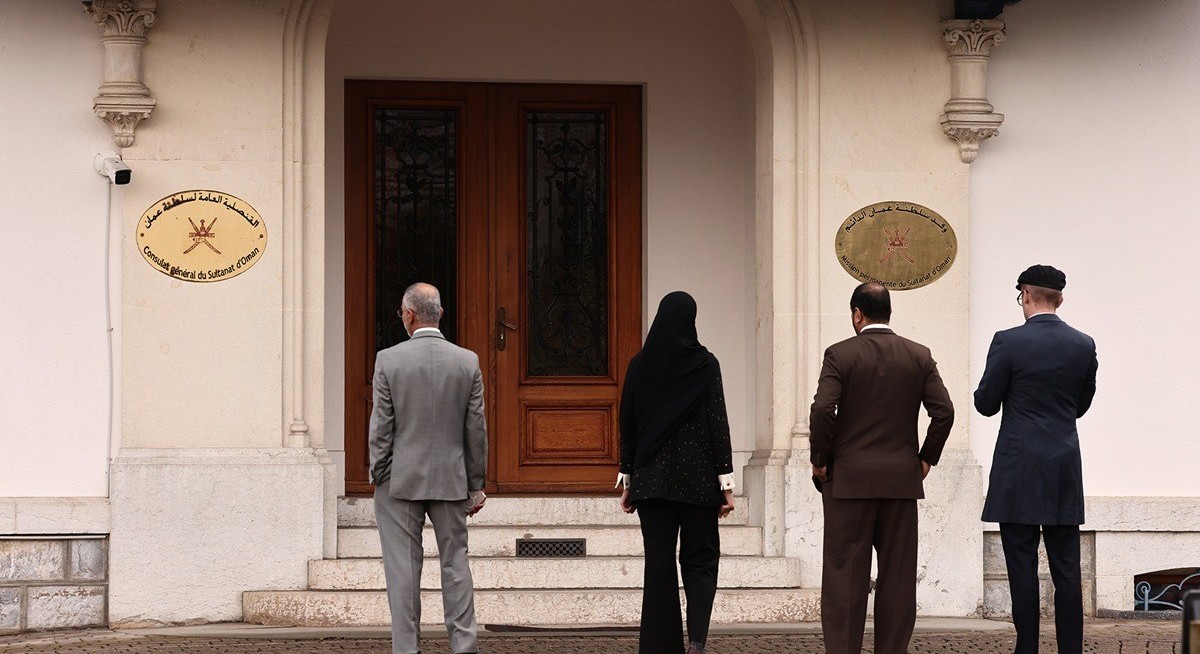


(Feb 27): US and Iranian officials ended the latest round of nuclear talks in Geneva on Thursday by agreeing to reconvene as soon as next week, opening the door to further diplomacy even as US President Donald Trump masses military forces in the region.
With just days to go before Trump’s deadline to reach an agreement, the two sides agreed to resume discussions at a technical level in Vienna. Oil pared gains given the prospect of more talks, though there was no public reaction from the US side, led by special envoy Steve Witkoff and Trump’s son-in-law Jared Kushner.
A person familiar with the US position said the Americans were leaving Geneva disappointed with the progress of the talks. Axios reported earlier that Kushner and Witkoff were disappointed by what they heard from Iranian officials in their morning session.
Officials from Iran and mediator Oman were more upbeat. The talks Thursday showed good progress, Iranian Foreign Minister Abbas Araghchi told state TV. Oman’s Foreign Minister Badr Albusaidi likewise hailed “significant progress” in a post on X and said negotiations will resume at a technical level in Vienna after an initial consultation period.
For part of the discussions Thursday, US officials sat face-to-face with the Iranian delegation, with the Omani mediators also present. Trump envoy Tom Barrack and UK National Security adviser Jonathan Powell also flew in to be on the sidelines for the talks.
Unlike nuclear talks under prior US administrations, the Iranians have taken the lead in crafting written proposals and brought them to the Americans.
See also: New Iran talks set for next week as US builds up forces
Iran said it won’t allow any of its highly enriched uranium to be moved out of the country, Press TV said, citing Esmail Baghaei, a spokesman for Iran’s Ministry of Foreign Affairs.
While US officials have yet to comment publicly on Thursday’s talks, they’ve previously signalled that Iran would have to send such stocks of uranium to another nation or dilute them.
The Wall Street Journal reported earlier that the US team had tough demands for the Iranians, including that they destroy the three main nuclear sites at Fordow, Natanz and Isfahan. The team also said any nuclear deal must last forever and not have so-called sunset clauses, the newspaper reported, citing unnamed US officials.
See also: IMF approves US$8.1 bil new financing programme for Ukraine
The US and Iran have been locked in a tense standoff over the Islamic Republic’s atomic activities and have traded threats as Trump ordered a substantial military build-up in the Middle East, sending two carrier strike groups to the region as a warning. Roughly a week ago, Trump gave the Islamic Republic a deadline of 10-15 days to reach a deal.
Global markets are watching closely, with any prolonged conflict in the energy-rich Persian Gulf likely to elevate oil prices and stoke inflation.
Benchmark Brent rose roughly 1.8% to over US$72 a barrel as of 6:10pm in London before paring gains. It’s up more than 18% this year, largely because of the US-Iran standoff.
Energy traders are focused on signs of disruption to shipments through the Strait of Hormuz, the narrow waterway off Iran’s southern coast that connects key oil producers in the region to world markets. Iran has threatened to retaliate forcefully against any US attack, and analysts have suggested they will move to cut off the Strait of Hormuz.
Saudi Arabia and Iran have both accelerated exports of crude in recent weeks as tensions have soared.
The Pentagon’s stepped-up deployment in the region — the biggest since the 2003 invasion of Iraq — is set to get a boost in coming days when a second aircraft carrier arrives that could join in any potential attack or help defend against Iranian retaliation.
A member of Israeli Prime Minister Benjamin Netanyahu’s Security Cabinet, Avi Dichter, on Thursday confirmed media reports that the US had stationed F-22 fighter jets, as well as refuelling planes in Israel. It’s rare for Israel to host other countries’ aircraft.
To stay ahead of Singapore and the region’s corporate and economic trends, click here for Latest Section
US demands for a deal have varied, with Trump repeating that he won’t allow Tehran to obtain a nuclear weapon despite its public position — long met with skepticism in the West — that it isn’t seeking one. Washington has also expressed frustration at Iran’s refusal to discuss its ballistic missile programme.
Tehran’s priority in the talks is the lifting of sanctions that have hobbled its economy, fuelling a currency crisis that sparked widespread street protests against the Islamic Republic in December.
Uploaded by Liza Shireen Koshy




