





(April 11): US President Donald Trump’s insistence that Iran reopen the Strait of Hormuz as the two sides head for diplomatic talks this weekend is having no effect, with transit still largely limited to Tehran-linked vessels.
Despite the start of a ceasefire that Washington said is conditional on resumed flows, just nine ships have been observed passing through the strait since Thursday morning — with five exiting the Persian Gulf and four entering.
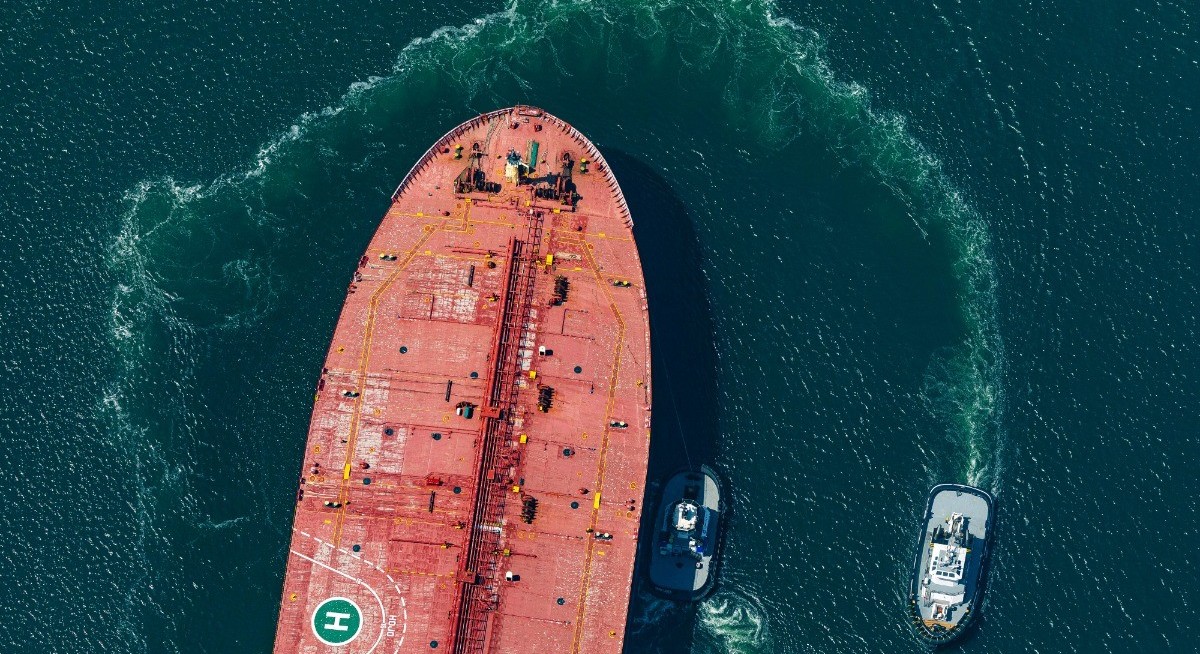
Among the most important was the Suezmax oil tanker Tour 2, hauling about one million barrels of Iranian crude out of the waterway. A supertanker sailing under the flag of Russia, the Arhimeda, moved in the opposite direction, heading towards Iran’s main export terminal at Kharg Island.
The Iranian transits — and a distinct lack of movement of other vessels — demonstrate Tehran’s ability to control what passes through a strip of water that’s vital to the world economy. The disruption also reflects the struggle to settle a deal, with Iran saying that talks are invalidated by Israeli strikes in Lebanon.
“Iran is doing a very poor job, dishonourable some would say, of allowing oil to go through the Strait of Hormuz. That is not the agreement we have!” Trump said in a Truth Social post on Thursday. “You will see oil start flowing, with or without the help of Iran and, to me, it makes no difference, either way.”

See also: EU and US near critical minerals deal to combat Chinese control
The US president also warned Iran against charging fees on tankers going through Hormuz.
Saudi attacked
Saudi Arabia said a series of attacks on its critical energy infrastructure disrupted oil and gas production and hit supply to global markets that are already reeling from the Iran war.
See also: Trump warns Iran not to charge fees for ships transiting Hormuz
Production, transportation, refining, petrochemicals and power generation were “recently” targeted in Riyadh, the Eastern Province and Yanbu Industrial City, the state-run Saudi Press Agency said Thursday, citing an Energy Ministry official. The attacks included a pumping station on the East-West pipeline, the main means of getting the nation’s crude to the world during the Iran war.
“Saudi Arabia is still taking fire from Iran — so the conflict goes on, the flows haven’t resumed,” Bob McNally, the president of Rapidan Energy Group and a former White House official, told Bloomberg Television on Friday. “I would have low expectations about a realistic restart of Hormuz transit.”
While several fully-laden supertankers, each carrying around two million barrels, moved toward the waterway in the past two days, none made the crossing out of the Persian Gulf.
Since Thursday morning, two Iran-linked oil tankers sanctioned by the US — one of which was the Arhimeda — along with two bulkers and a single container ship have been observed leaving the Persian Gulf. On Friday morning, the only vessel seen heading into the gulf was a Chinese-linked bulk carrier.
All transits observed in the past day passed through a narrow northern corridor of the Strait between the Iranian islands of Larak and Qeshm.
While tanker tracking is hampered by electronic interference with ships’ signals, there is widespread acceptance that Hormuz is effectively shut.
Some vessels also disable their AIS transponders in high-risk waters, further reducing the timeliness and reliability of tracking data, meaning that some vessels pop up again days after navigation.
To stay ahead of Singapore and the region’s corporate and economic trends, click here for Latest Section
Several oil tankers inside the Persian Gulf are anchoring near the approach to the strait, likely in order to be among the first to get underway as soon as the waterway does open up.
Two Japanese oil tankers left the waters off Saudi Arabia’s Ras Tanura on Thursday to move closer to the strait, following a similar move by three fully-laden Chinese ships.
A Greek oil tanker, the Serengeti, reappeared on automated tracking systems off Sri Lanka on Thursday, meaning it would have made the outbound around the start of the month.
Uploaded by Tham Yek Lee




