



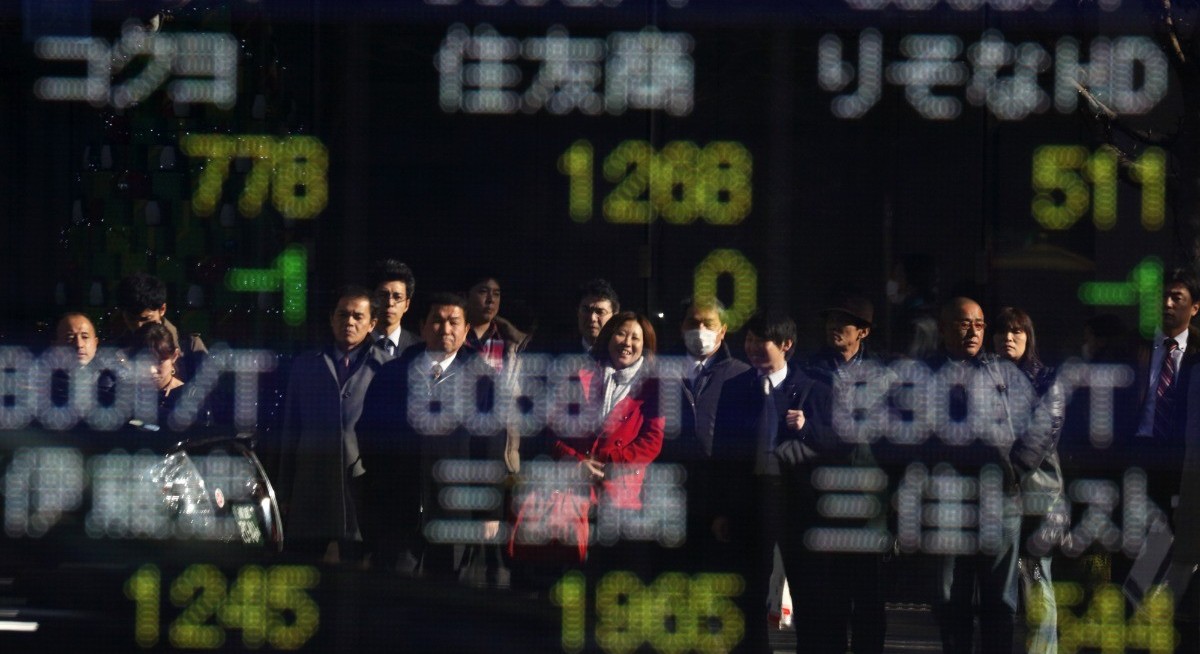


(March 10): Asian stocks rebounded on Tuesday after Monday’s sell-off and crude oil fell, as US President Donald Trump signalled the Iran war may be nearing an end, offering markets a brief reprieve from selling.
Stocks jumped in Japan, South Korea and Australia, helping the broader MSCI Asia-Pacific Index rise 2.2%, a sharp reversal after tumbling 3.7% on Monday. Roughly six stocks advanced for every one that declined in the index. Wall Street gauges also reversed their earlier losses to finish the session on a bullish note as tech shares rallied.
The optimistic shift came as Trump said the war with Iran would resolve “very soon”. The president said that he did not believe the conflict would be over this week, but insisted the operation was ahead of schedule. The US military objectives could be described as “pretty well complete,” he said.
Brent crude fell 10% to US$89.06 ($113.57) a barrel, well off the peak of US$119.50 hit in Monday’s session. Other markets also reversed their moves. Yields on the 10-year Treasury halted a five-day increase and the dollar extended losses made in the New York session.

The moves show how sensitive markets remain to every turn in the Middle East conflict, with a single headline enough to send traders scrambling. Cross-asset volatility showed little sign of easing — with a market risk indicator hovering near levels seen when Trump unveiled global tariffs last year — as investors grapple with a fast-moving geopolitical conflict that offers no clear trading playbook.
See also: Stocks slump as oil surges past US$100, dollar gains
“What we are seeing now is more of a relief rally after an extreme risk-off episode, rather than a genuine shift back into a full risk-on environment,” said Dilin Wu, a research strategist at Pepperstone Group.
Even so, equity-index futures on US benchmarks slipped in early Asian trading, signaling the rebound may not hold. Contracts for the S&P 500 and the Nasdaq 100 were down 0.2%, having pared losses of as much as 0.6%.
Trump’s comments at press conferences “haven’t been the most informative signal”, so investors would well remain sceptical, Eric Van Nostrand, the chief investment officer of Lazard Asset Management, said in a Bloomberg TV interview.
See also: Iran-led rout tempts dip buyers’ bets on Asian chip stock rebound
“There’s a lot of misplaced confidence in markets right now that things will ease quickly as they have in previous episodes of elevated Middle Eastern tensions,” he said. “But I do think what we are seeing today, given the likely duration of closure of the Strait of Hormuz, is something quite different. It is going to affect the global economy really in a very meaningful and global way.”
Crude had a volatile session on Monday that saw the commodity swing in the widest range since prices briefly turned negative during the depths of the pandemic. Oil surged towards US$120 a barrel early on Monday before pulling back as the world’s largest economies considered an effort to release emergency oil reserves.
Still, the vital Strait of Hormuz remains effectively closed, which has led to major producers in the Persian Gulf, including Saudi Arabia, curtailing output. The waterway is crucial for the global movement of crude oil.
Group of Seven finance ministers said they were ready to take any steps needed to support energy supply, including releasing strategic oil reserves — although the group isn’t at the point of doing so yet. Meantime, Trump is expected to review a set of options to tame oil prices, including restricting US exports and waiving some federal taxes, Reuters reported.
“We expect markets to stay very short-term focused, volatile and headline-driven as the conflict plays out this week,” said Carol Schleif at BMO Private Wealth.
Corporate highlights:
- Hewlett Packard Enterprise Co gave an outlook for revenue in the current quarter that exceeded analysts’ estimates, a sign the company is benefitting from solid demand for hardware that helps customers run artificial intelligence (AI) workloads.
- Apple Inc’s AI struggles are rippling through its product plans, forcing the company to delay a long-in-the-works smart home display until later this year, according to people with knowledge of the matter.
- Anthropic PBC sued the Defense Department for declaring the AI giant posed a risk to the US supply chain, further ramping up a high-stakes dispute with the Pentagon over safeguards on the company’s technology.
- Novo Nordisk A/S and Hims & Hers Health Inc will work together to sell obesity drugs, a sudden reversal after more than eight months of acrimony that culminated in a legal battle.
To stay ahead of Singapore and the region’s corporate and economic trends, click here for Latest Section
Some of the main moves in markets:
Stocks
- S&P 500 futures were down 0.2% as of 9.53am Tokyo time on Tuesday
- Hang Seng futures rose 0.4%
- Nikkei 225 futures (OSE) rose 3.4%
- Japan’s Topix rose 2.6%
- Australia’s S&P/ASX 200 rose 1.5%
- Euro Stoxx 50 futures rose 1.7%
Currencies
- The Bloomberg Dollar Spot Index was little changed
- The euro fell 0.1% to US$1.1624
- The Japanese yen was little changed at 157.70 per dollar
- The offshore yuan was little changed at 6.8937 per dollar
- The Australian dollar was little changed at US$0.7070
Cryptocurrencies
- Bitcoin rose 0.3% to US$69,169.63
- Ether fell 0.5% to US$2,016.21
Bonds
- The yield on 10-year Treasuries advanced one basis point to 4.11%
- Japan’s 10-year yield declined three basis points to 2.150%
- Australia’s 10-year yield declined 10 basis points to 4.84%
Commodities
- West Texas Intermediate crude fell 9.1% to US$86.18 a barrel
- Spot gold fell 0.1% to US$5,131.88 an ounce
Uploaded by Tham Yek Lee




