



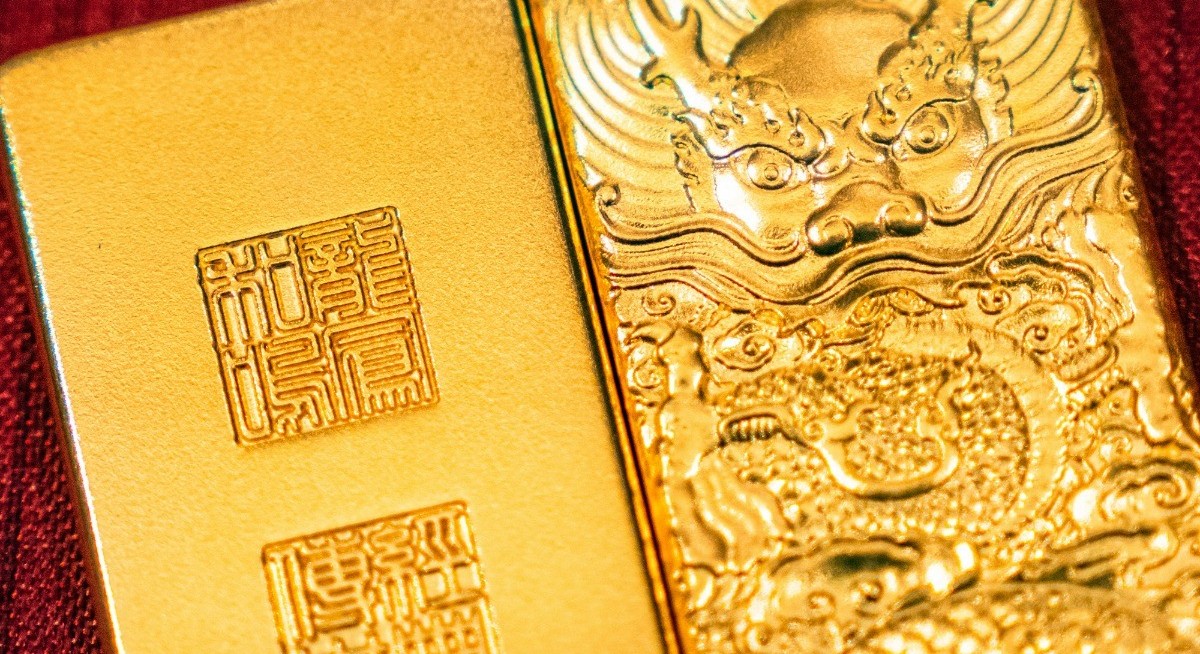


(March 27): Hong Kong is inviting a number of China-friendly central banks to participate in its gold-clearing system as part of a push to elevate the city as a major bullion-trading hub.
The city is targeting countries already engaged in Beijing’s Belt and Road initiative to supply the institutional clout needed to position Hong Kong as an alternative centre to London, according to people familiar with the matter, who asked not to be named discussing sensitive matters. They did not specify which central banks had been invited.
The drive by Hong Kong will complement Beijing’s recent efforts to woo sovereign nations to store gold in mainland China, and is part of a broader strategy to extend the international appeal of the Chinese yuan as an investable asset, the people said.
The Hong Kong government didn’t reply to a request for comment.
A public campaign unveiled this year promotes the special administrative region as a trading, financing and storage hub for gold, with a government-run clearing system slated to begin trials this year. Hong Kong also signed a cooperation pact with the Shanghai Gold Exchange and reiterated a pledge to expand gold-storage capacity to 2,000 tons within three years.
Securing the buy-in of central banks — the ultimate providers of liquidity, given the large volumes of gold held in reserves — could give a significant boost to Hong Kong’s ambitions, along with support from established financial institutions that serve as market-makers. Together, they form the backbone of the world’s dominant gold-trading hub — London — where billions of dollars’ worth of the metal is traded every day.
See also: Super rich regain zest for Hong Kong as war stokes Gulf unease

Hong Kong is also likely to meet stiff regional competition — Singapore, for example, is planning to expand its gold-storage capacity to become a custodian of bullion held by foreign central banks. It has tapped local and international banks including JPMorgan Chase & Co and UBS Group AG to boost liquidity and make the most of demand from wealth investors.
Gold has retreated sharply since the start of the war in the Middle East, which precipitated a broad selloff to meet margin calls elsewhere and has fanned concerns of inflation as energy prices spike. Many investors, however, continue to see bullion as a long-term store of value after a prolonged rally underpinned by central-bank buying.
See also: Hong Kong bourse plans micro futures on Hang Seng, tech index — Bloomberg
Central banks typically keep at least some bullion in London for ease of management, where liquidity is generated through trading and lending activities. China’s initiative last year came as some nations began to explore alternative locations for their custodian vaults, according to the people.
Cambodia was one of the first countries to take up China’s offer to hold bullion, while the South African Reserve Bank said last year it would consider storing its reserves in any optimal location.
For countries keen to diversify, Hong Kong and mainland China offer two very different propositions. Hong Kong’s offshore status provides relative ease of shipments in and out, while the mainland maintains much tighter control over gold trades — all imports must be routed through the Shanghai Gold Exchange, the main bourse, and exports are strictly limited.
To help in its efforts to develop a gold hub, Hong Kong has secured the support of various international and Chinese state-owned banks — including HSBC Holdings plc, Standard Chartered Bank plc, Bank of China Ltd and Industrial and Commercial Bank of China Ltd, the people said.
Standard Chartered, BOC and ICBC didn’t immediately reply to requests for comment. A spokesperson for HSBC declined to comment.
Hong Kong is still finalising details of its proposed clearing system, the people said, including the type of bars permitted for delivery and the currencies in which trade can be settled.
Some of the people said the city is considering using the London Good Delivery standard — the global benchmark used by big banks and sovereign buyers — to align with international markets. A standard tailored for Hong Kong is also under consideration, although that may take some time, the people said.
Uploaded by Chng Shear Lane




