






(July 3): Japan’s fervent fans of everything from pop idols and anime characters to online streamers have turned their devotion into an inflation-proof pillar of the consumer economy.
From collecting Hello Kitty knick-knacks to manga figurines, what was once considered a niche hobby has evolved into a fan-merchandising economy estimated to be worth ¥4.1 trillion (US$25 billion or $33 billion). The phenomenon, known as oshikatsu, has even attracted the Bank of Japan’s attention as a source of spending among the young.
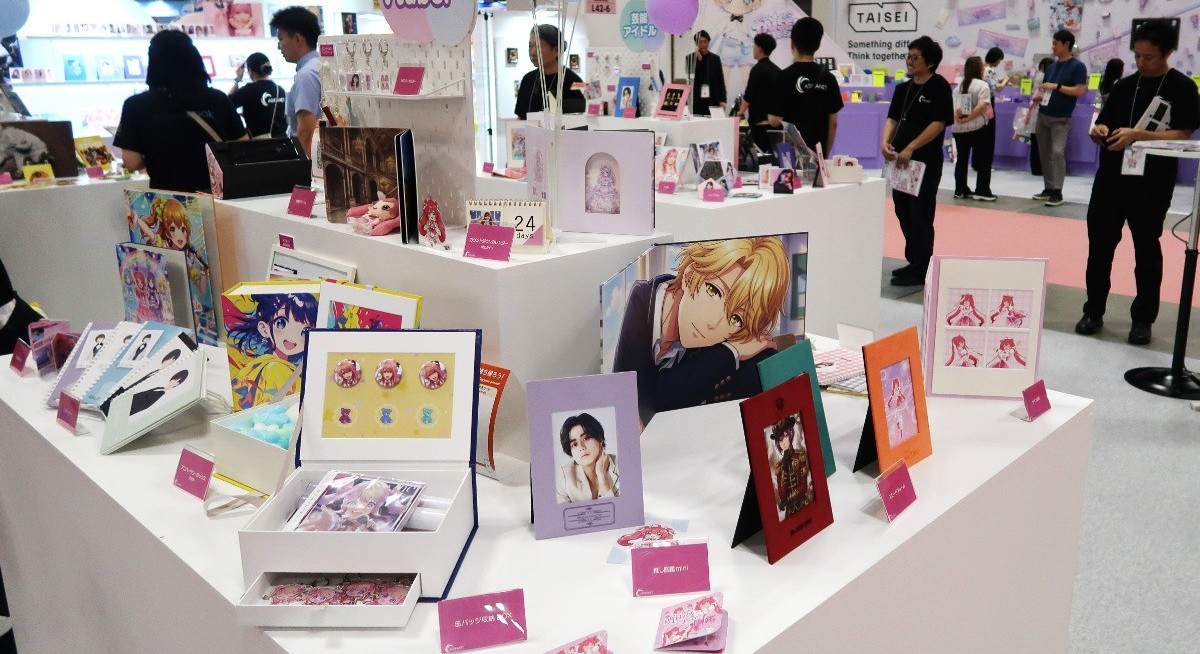
The expanding ranks of devotees are drawing a wide and fast-growing range of businesses eager to tap new sources of retail revenue in an otherwise sluggish economy. The Oshikatsu Expo, held in Tokyo last month, saw more than 240 suppliers setting up booths to hawk their wares to the companies that manage popular idols and characters — up from roughly 20 when the trade show started two years ago.
Pinole Co, a Japanese fragrance company that makes its own perfumes as well as scents for other brands, was among the vendors with booths displaying everything from collectible badges and life-size character cutouts to smartphone cases. “People want to feel connected to their idol by wearing the scent,” said Kei Yamasaki, director of business development at Pinole.
While such fan fervour and accompanying merchandising isn’t necessarily new, the expanding universe of products and mainstream interest is fuelling interest from companies far beyond the entertainment industry, according to Nanami Semachi, a fan-turned-expert who advises businesses on how to tap into the oshikatsu boom.
“The official side of fandom has existed for years,” said Semachi, who charges ¥20,000 for individual courses and ¥550,000 for corporate consultations. “What’s expanding now is the unofficial side: fan advertising, fan-organised activities, communities and new services that support those behaviours.”
See also: Japan’s manufacturer mood improves to highest level since 2018
Oshikatsu isn’t just limited to Japan. South Korea’s devotees for idols, characters and celebrities also engage in deokjil, an equally devoted cultural phenomenon that also leans more towards group activities.
For the most part, the actual fans weren’t at the event in Tokyo, which was mainly for the companies seeking to monetise fan devotion. One of them was Katani Co, a gold-leaf manufacturer that’s been in business for 127 years as a provider of metal foils used in packaging, cosmetics and automotive parts.
One of the company’s more unusual offerings was a gold-plated shrine for fans to display a photo of their favourite idol. The altar sells for ¥500,000 to ¥600,000, while smaller versions cost around ¥100,000.
See also: Takaichi's central bank board pick signals tame view on inflation
“We wanted to put something more glamorous into the market,” said Yasuaki Higashikawa, a sales representative who said that Katani’s most popular product is a gold-plated photo card for licensed characters. The oshikatsu segment generated about ¥80 million in sales for the company, which is considering a dedicated sales team to focus on such products.
Japan’s demographic shifts are helping to transform oshikatsu into big business, according to Kohei Okazaki, chief market economist at Nomura Securities Co. Roughly one in four Japanese consumers said they engaged in oshikatsu in a January poll, up 7.3% from a year earlier. Although fan spending is predominantly driven by women, much of recent growth is also being driven by men in their teens through 40s.
Initially a subculture among hardcore fans, the oshikatsu sector has broadened as consumers without children often have more disposable income and free time to devote to fan activities. Money that once went toward hobbies such as cars and alcohol is increasingly being redirected into entertainment-related consumption, according to Okazaki.
“What was once largely viewed as a youth culture has increasingly spread to older consumers as well,” Okazaki said. “Companies can now target people not by age or gender, but by what they love.”
Even as oshikatsu spreads beyond its most devoted fans, the market is changing. Average annual spending has fallen to about ¥210,000 from roughly ¥255,000 a year earlier, a sign that more casual supporters are entering what was once a concentrated group of heavy spenders. At the same time, that could raise the risk that oshikatsu might be viewed as unhealthy or fostering dependency, particularly among young people, according to Semachi.
“If the industry simply keeps trying to raise spending per customer indefinitely, it risks destroying itself,” she added.
At Pinole’s booth, visitors were sampling perfume bottles adorned with images of pop idols, and even baseball players. The company has rolled out a smartphone app that lets people interact with an AI bot that turns descriptions of any figure into a customised perfume formula in minutes.
To stay ahead of Singapore and the region’s corporate and economic trends, click here for Latest Section
“We’ve been developing tools like this to make it easier for people involved in fan activities,” Yamasaki said. “It’s a way to bring that presence into their personal space.”
Other vendors are racing to make it easier to cash in on impulsive spending. SDRS Corp has developed an oshikatsu vending machine that combines capsule-toy randomness with larger-scale merchandise sales, photo booths and mini games that let fans interact virtually with their idols.
“Consumption is increasingly being organised around a simple principle: people want to spend money on the things they love,” Okazaki said.
Uploaded by Chng Shear Lane




