
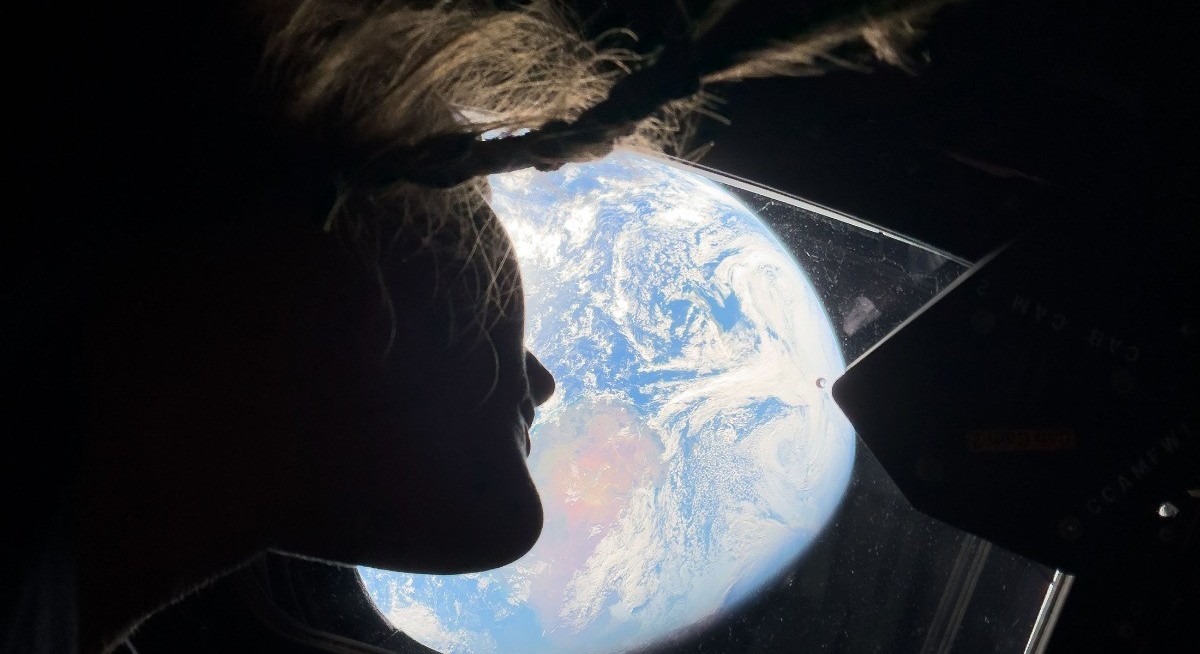

(April 11): Nasa’s Artemis crew of four astronauts returned to Earth and splashed down in the Pacific Ocean on Friday, capping humanity’s first return to the moon in more than 50 years.
The Lockheed Martin Corp-built Orion crew capsule carrying the Artemis II crew completed a fiery plunge through the planet’s atmosphere, before touching down under parachutes off the coast of California just after 5pm local time. Nasa said the crew was in good health.
“A perfect bullseye splashdown for Integrity,” said Rob Navias, the public affairs officer of mission operations at Nasa’s Johnson Space Center.
“From the pages of Jules Verne to a modern-day mission to the moon, a new chapter of the exploration of our celestial neighbour is complete,” he said.
Their completion of a journey spanning 694,481 miles (1.1 million kilometres) from liftoff represents the last major test of the 10-day Artemis II mission, which sent the astronauts around the moon, broke human spaceflight distance records and captured breathtaking images.
US Navy boats could be seen on a live broadcast encircling the bobbing Orion capsule after splashdown. The recovery team unfurled a giant inflatable raft known as the “front porch”, and successfully pulled all four astronauts from the capsule roughly an hour and a half after landing. They will be headed to a recovery ship to undergo medical checks before embarking on their journey home to their families.
See also: Singapore targets the space data economy as value shifts beyond orbit
“The entire trip was spectacular, the landing was perfect and, as the president of the US, I could not be more proud!” Donald Trump said in a social media post. “I look forward to seeing you all at the White House soon. We will be doing it again and then, next step, Mars!”
Despite a near picture-perfect return, the crew experienced some issues with their satellite phone communications between them and the recovery team when they were in the water.
“This was a textbook entry and a textbook touchdown for Integrity. Reid Wiseman, Victor Glover, Christina Koch and Jeremy Hansen back on Earth after a journey around the moon,” Navias said.
See also: Global Invacom signs MOU to produce next-gen multi-orbit flat panel antenna
The mission captivated audiences around the world from the moment the capsule blasted off atop the Boeing Co-built Space Launch System rocket on April 1. Viewers tuned in to witness the crew’s daily life — ranging from mundane rituals like shaving and troubleshooting a broken toilet, to capturing pictures of an eclipse during the farthest human space voyage in history.
“Honestly, I’m still at a loss for words,” Nasa administrator Jared Isaacman, surrounded by cheering spectators, said on a live broadcast aboard the recovery boat.
“I just couldn’t be more proud of the entire workforce, the years, the effort, the late nights, all the hard work from across the country that contributed to this incredible moment right now,” he said.
During their roughly 13-minute plunge back to Earth, plasma built up on the outside of Orion and temperatures reached nearly 5,000°F (2,760°C). Orion reentered Earth’s atmosphere at about 25,000 miles per hour.
All eyes were on the performance of Orion’s heat shield, a protective barrier on the outside of the spacecraft designed to safeguard the capsule from extreme temperatures that build up during the descent through the atmosphere.
Leading up to this mission, critics such as former Nasa astronaut Charles Camarda have raised concerns about the heat shield, arguing it is not safe enough to protect the crew.
During the Artemis I mission in 2022, larger than expected chunks of the heat shield broke off during the uncrewed capsule’s descent.
To stay ahead of Singapore and the region’s corporate and economic trends, click here for Latest Section
Nasa made the decision to fly Artemis II with the same heat shield design but altered the path Orion took through the atmosphere to minimise the length of time the capsule spent in super-extreme temperatures. For subsequent Artemis missions, the craft will get a new heat shield.
While the Artemis II mission was deemed a success, the trip was not without technical issues. Nasa discovered a problem with the propulsion system on Orion’s cylindrical service module and how it stays pressurised. That system will likely need an “extensive redesign” for future missions, according to Amit Kshatriya, Nasa’s associate administrator.
“That is a new finding. Certainly, we are going to go investigate that,” Howard Hu, Nasa Orion programme manager, said during a press conference after splashdown. “We are going to look at that and move forward and make sure that we make some changes if necessary.”
With the mission now over, Nasa will apply the lessons learned from Artemis II as the agency strives to land humans on the moon’s surface as soon as 2028.
“This is the first mission — our first mission — to the moon of many more to come,” Lori Glaze, Nasa’s acting associate administrator for exploration systems development, told reporters. “And we can’t wait.”
Uploaded by Tham Yek Lee


