



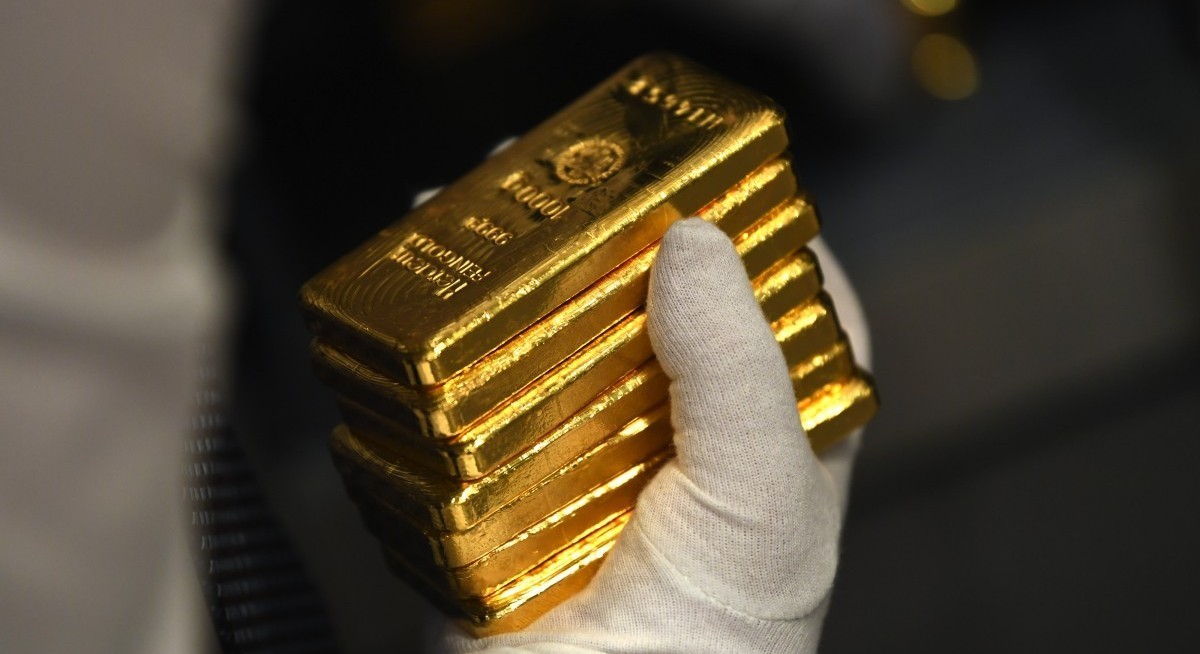



Robust demand for gold in Asia has been fuelled by rising wealth in the region, says Jimmy Poh, OCBC’s managing director of asset allocation, risk strategy and XVA in global markets. “Asia is still seeing robust demand in gold in contrast to Western markets where demand has stabilised and even declined slightly,” he adds. “Retail investors and ultra-high-net-worth (individuals) are holding gold as part of their portfolio, and coupled with demand trends, it suggests that the region is getting richer with rising wealth inflows and new wealth creation.”
Poh, who was speaking at the Investing with Greater Clarity in a Fragmented World, an OCBC Securities forum held on May 16, was joined by Christopher Wong, executive director and FX strategist at OCBC Group Research, on the panel entitled “Precious Metals Supercycle: Hedge, Growth Play, or Portfolio Core?”

Jimmy Poh, OCBC’s managing director of asset allocation, risk strategy and XVA, global markets
Central banks have also been a source of demand for gold, says Wong. “The trend started in 2017 and accelerated over the last three to four years, especially in Asia with China and India leading the way,” he says while echoing Poh’s point about portfolio allocation.
For Wong, there is a wide variation in the proportion of gold held by central banks, ranging from 1.1% for Singapore to as high as 40% for Russia, in contrast to most investors, whose recommended allocation is 5%-10%, the pair notes.
See also: More Singapore residents target more than $1 mil and retirement in their 40s: CIMB-NTU study

Christopher Wong, OCBC Group Research executive director and FX strategist
Poh also suggests that the typical allocation may increase in future as new ways of owning the precious metal are developed. “At present, gold does not have yield, and there is a cost to holding on to gold, so the 5%-10% as an asset allocation does make sense.”
See also: Global fragmentation drives flows to Asean
“However, tokenisation and digital assets could change the nature of gold investment to include earning yield, and that may lead to higher allocation to gold.”
While gold is seen as a monetary and financial asset, other precious metals such as silver and platinum should be viewed differently, they say. Wong points out that both silver and platinum have industrial uses that affect demand, while Poh notes that rising silver prices may fuel inflation.
Silver prices have remained elevated, and gold prices have also touched historic highs in 2026. While declining from its high of almost US$5,500 ($7,053) per ounce, gold is still up for the year at around US$4,500 per ounce.
As a financial asset, gold is sensitive to macroeconomic factors such as interest rates, geopolitical tensions and oil prices, Wong says. “If interest rates remain elevated, that increases the opportunity cost, so the appeal of holding gold will be impacted.”
Complementing Wong’s view, Poh says that gold is behaving like a typical financial asset, which is affected by market factors. “If the geopolitical risk were to fade, the focus on dollar debasement continues, the demand for gold would go up, and the price would go up,” says Poh. “The volatility of gold prices suggests that it’s not really behaving like a safe haven asset as much as what it used to be.”
Despite gold’s increased volatility, interest in precious metals, particularly paper gold, has not been dampened. OCBC said in February that two in three retail customers in 2025 chose to start their investment journey with the bank by investing in gold and silver paper bullion.
Poh says paper gold represents ownership of physical gold, with the bullion ring-fenced from the custodian. Other advantages include the elimination of storage fees and higher trading liquidity.
To stay ahead of Singapore and the region’s corporate and economic trends, click here for Latest Section
Singapore announced in March that it is preparing to become a gold hub. Wong expects the city-state to develop gold value-chain infrastructure, from settlement and clearing to vaulting and logistics. He says this could enhance market access, product innovation and price discovery.
For Poh, Singapore’s development as a gold hub is a testament to its status as a safe haven. He believes the growing amount of assets, including gold, under management reflects the country’s trust premium.
Poh is optimistic about Singapore’s ambitions to become a gold hub, and believes gold could rise to US$6,000 per ounce. He adds that reaching this price depends on the de-escalation of the West Asia conflict, while Wong adds that there is a “good chance” that gold prices may pick up should oil prices normalise back towards the US$70-US$80 range.




