



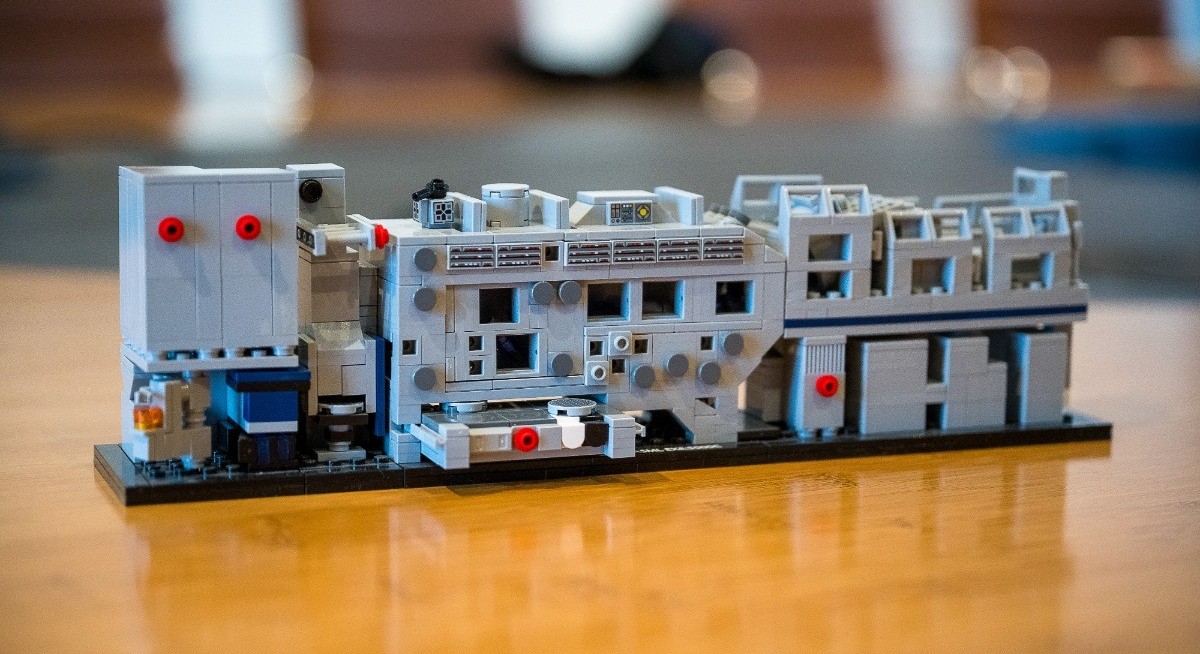



(July 15): ASML Holding NV is working to cut the time it takes to build and test its advanced lithography tools in its factories by about a third, according to the Dutch firm’s finance chief, as artificial intelligence-driven (AI) demand soars.
ASML makes the cutting-edge extreme ultraviolet lithography, or EUV, machines that are necessary for chipmakers to manufacture advanced semiconductors and is experiencing a surge in demand driven by artificial intelligence. It takes more than a year to deliver EUV machines following an order, and the period between the company starting production in its own clean rooms and shipping — known as cycle time — was about 22 weeks a few quarters ago.
“We’re now looking at bringing that down to 15 to 16 weeks,” Chief financial officer Roger Dassen told reporters on Wednesday.
The company is “close to being fully booked” for EUV machines in 2027, with a “substantial number” of orders for 2028, Dassen said. He called it “rare” to have those orders kick in two years or more in advance, a signal of demand from ASML’s chipmaker customers.

ASML Holding NV chief financial officer Roger Dassen said the company is 'close to being fully booked' for EUV machines in 2027, with a 'substantial number' of orders for 2028.
See also: Report finds AI feature in Google Search poses ‘unacceptable risk’ to kids
Making enough machines to meet demand is a key challenge for the company, which outlined plans to make about 65 units of its low NA EUV machine this year. It also laid out targets to increase capacity by 30% for 2027, while “investigating” a further boost of 30% the following year. ASML boosted its full-year sales guidance on Wednesday to between €43 billion and €45 billion this year.
The Dutch company relies on a raft of suppliers to make its modular machines and, besides working with its supply chain, the company is optimising its own processes to reach higher capacity levels.
“We see opportunities to reduce the testing protocol and still maintain quality,” Dassen said. That means that the cycle time for a machine within a clean room space, or cabin, is reduced and “we can crank out more tools, and customers are open to that,” he said.
See also: US says small amount of Nvidia H200 chips sold to China via licence
The chip-gear maker has also reviewed how its cabins are organised to focus on faster delivery.
“Typically, in some of those cabins, we also would have R&D equipment, test equipment. We try to find other homes for those such that all the cabins that we have can actually be completely dedicated to output,” he said.
Uploaded by Felyx Teoh




