



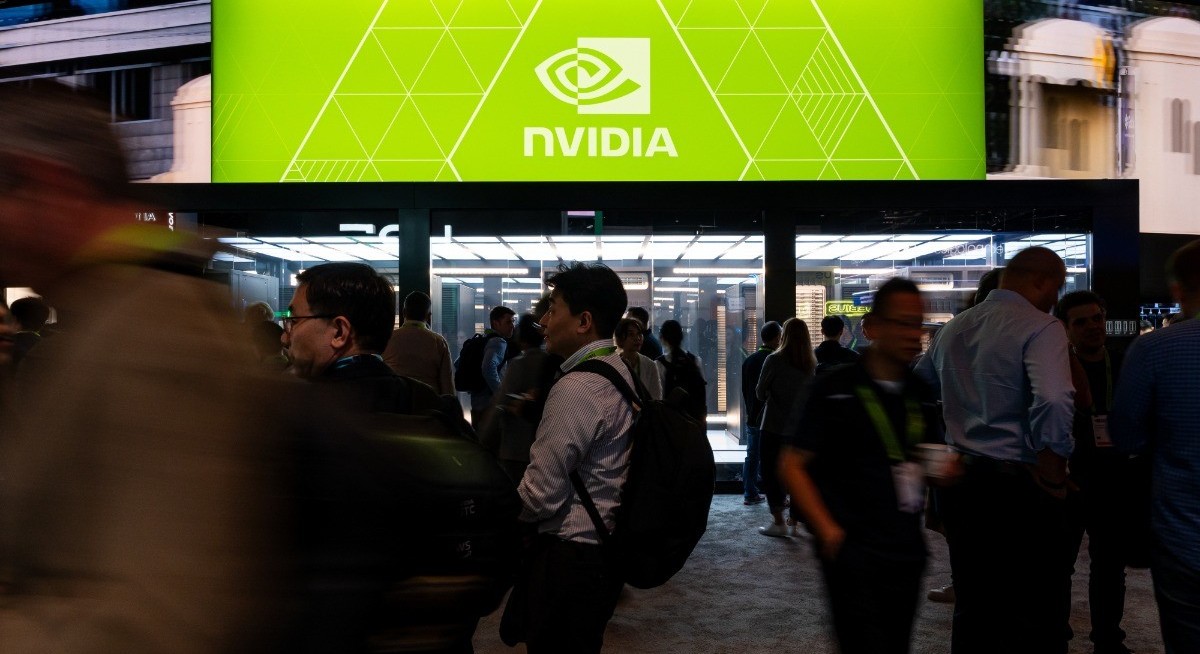



(July 15): A small number of Nvidia Corp’s H200 artificial intelligence (AI) chips have been shipped to customers in China after winning US approval, the Trump administration official who oversees export control programmes confirmed.
Jeffrey Kessler, under secretary of commerce for industry and security, said on Tuesday that a “trivial” number of the Nvidia processors were shipped to China, though he declined to offer specifics on the amount of chips or the buyers.
“For the American people, the bottom line is very few shipments against licences for H200s and equivalents have taken place,” Kessler said during a hearing of the House Foreign Affairs Committee, which has jurisdiction over US export control programmes. “Very small quantity of chips, so it’s trivial.”
Nvidia’s H200 was cleared for export to China by President Donald Trump in December, a move that marked a significant easing of US export restrictions aimed at reining in Beijing’s AI ambitions. Until the introduction of the company’s next generation Blackwell models in late 2024, the H200 was the most powerful AI chip on the market, with superior memory capacity and bandwidth.
China is the world’s largest semiconductor market, and as recently as 2022 provided Nvidia with a quarter of its revenue. Since then, escalating US export curbs have driven the chipmaker’s sales in China to below 10%, mostly from PC graphics chips. The company has repeatedly told investors that it’s not expecting any additional revenue from AI processors in the Chinese market during the immediate future, even after Trump’s blessing for H200 sales.
In January, the Commerce Department issued a rule formalising Trump’s H200 decision that limited sales to verified Chinese buyers and set a 25% US levy on any shipments. It requires companies seeking US export licences for the chips to confirm that the technology won’t go to a Chinese military purpose or end user, including for nuclear, missile, chemical or biological weapons.
See also: OpenAI’s first device a movable, screenless speaker built as AI companion — sources
Kessler said that each H200 licence applicant “has to meet rigorous national security requirements, including making sure that the chips actually perform at the level they’re supposed to perform, not higher.”
While the US has given its blessing to H200 shipments to China, authorities in Beijing have slowed local companies’ purchases of the chips. That’s due in part to concerns by Chinese officials that a flood of American-designed AI chips would hinder the government’s long-held goal of developing an indigenous chip industry.
Spokespeople for Nvidia didn’t immediately respond to a request for comment.
See also: Apple’s US$650 bil rally fuelled by traders fleeing AI sell-off
During the hearing, Republican Committee chairman Brian Mast urged Kessler’s Bureau of Industry and Security (BIS) to take further steps to keep China from getting its hands on Nvidia’s more powerful line of Blackwell chips. Mast called for adding more Chinese entities to a Commerce Department blacklist, which lawmakers said has not happened since October 2025.
Mast pressed Kessler on whether Chinese tech giants — including ChangXin Memory Technologies Inc (CXMT), Yangtze Memory Technologies Co (YMTC), Tencent Holdings Ltd and Alibaba Group Holding Ltd — should be subject to further restrictions by the Commerce Department. All four companies are on a Pentagon watch list of entities believed by the US to aid China’s military, but only YMTC is on a blacklist overseen by Kessler’s office.
Kessler said he agrees with the Pentagon and thinks the bureau has to be “very careful” when allowing exports to those companies but stopped short of saying whether BIS is weighing more formal action against Tencent, Alibaba or CXMT, which is seeking to raise US$9.8 billion in an initial public offering in Shanghai.
Kessler’s appearance before the panel, his first in more than a year, came as House and Senate lawmakers seek to advance a series of bills that would tighten US export curbs. The Match Act, backed by Mast, would direct the administration to identify chip equipment and Chinese manufacturing facilities that should be restricted while pressing allies to adopt controls just as stringent as those faced by US companies.
In his testimony, Kessler sought to fend off bipartisan lawmakers’ concerns about missteps on semiconductor and AI policy. Under his leadership, the bureau has lost a significant portion of its employees and struggled to define its policies, a pattern that most recently led to rare Sunday night guidance clarifying that some of the most central restrictions on AI chips made by firms like Nvidia and Taiwan Semiconductor Manufacturing Co still existed.
“BIS is supposed to close loopholes, not create new ones,” Representative Bill Huizenga, a Michigan Republican said, adding that he has debated with Kessler privately about whether this is a loophole. “I’m sorry, but this is unacceptable.”
Huizenga also questioned Kessler on what he was doing to align controls with allies — as spelled out in the Match Act proposal — citing concerns that Chinese memory maker CXMT has a close relationship with Dutch chip toolmaker ASML Holding NV. Kessler was in the Netherlands a few weeks ago raising similar issues, he said.
To stay ahead of Singapore and the region’s corporate and economic trends, click here for Latest Section
Kessler highlighted the bureau’s latest enforcement actions, including a case filed against Super Micro Computer Inc, one of the largest export control prosecutions. He stressed the need for more funding to support future enforcement, citing the administration’s budget request to nearly double the bureau’s funding to US$450 million and carve out more than a thousand new job openings.
Lawmakers questioned Kessler about an office within BIS dedicated to handling import restrictions, which has seen turnover among about half of a roughly 85-person group, including its executive and deputy executive directors. The unit, known as the Office of Information and Communications Technology and Services, was created by an executive order in Trump’s first term.
Aside from a rule in early 2025 that moved to restrict imports of Chinese connected vehicles and deliberations about banning China-linked WiFi equipment company TP-Link Systems Inc, the office has been relatively dormant, even after House lawmakers recommended the Commerce Department use those authorities to investigate Chinese drones, semiconductor tools and robots, among other sectors.
Uploaded by Felyx Teoh




