



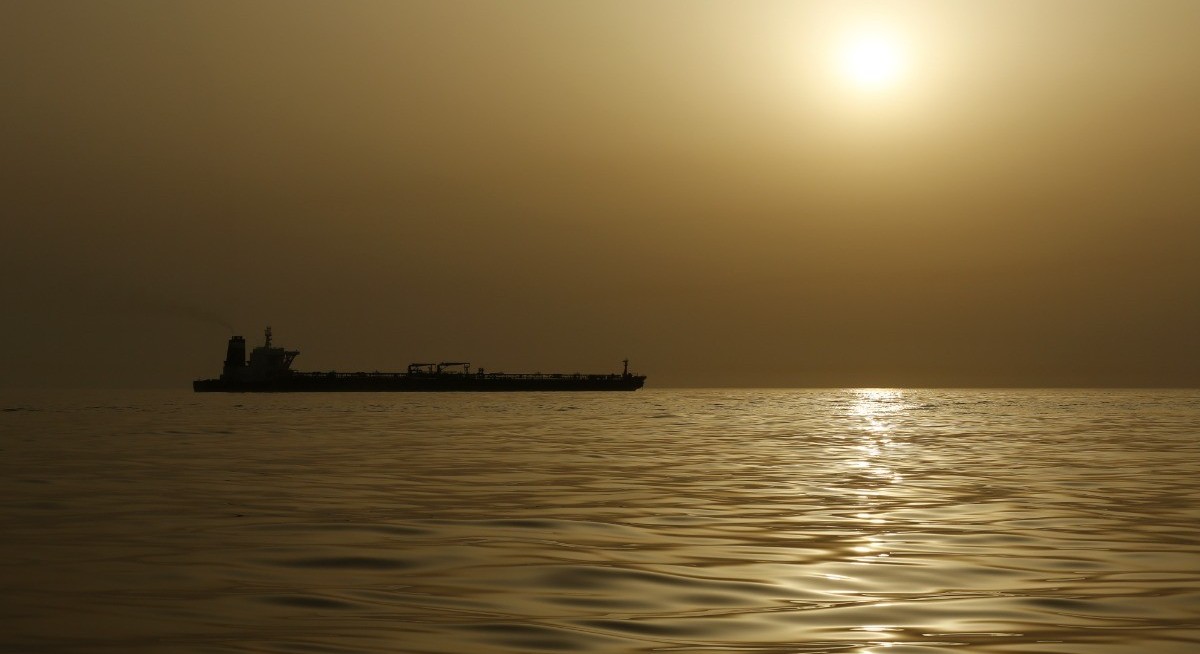



(July 13): A handful of ships have passed through the Strait of Hormuz in secret in recent days, even as observable crossings all but ceased, after a flare-up in fighting between the US and Iran.
All of the six commodity carriers that transited Hormuz on Sunday did so with their transponders turned off, according to preliminary Kpler data analysed by Bloomberg News. So-called dark crossings outnumbered observable passages for the previous three days.
There were no ships seen passing through the strait early on Monday, according to ship-tracking data based on Automatic Identification System signals. But vessels in recent days have appeared on either side of Hormuz — in the Persian Gulf or the Gulf of Oman — after having last broadcast their locations from the other side, indicating that they transited Hormuz without turning on their transponders.
Shipowners’ preference to go dark when pushing through Hormuz comes as the US and Iran exchange tit-for-tat attacks and also offer competing narratives of who is in charge of the strait.

Observable crossings taking the US-supported southern corridor along the Omani coast have ground to a complete halt, with the last passage via that route happening on Wednesday. That contrasts with the northern, Iran-designated safe route, which continued to see a handful of crossings through Saturday.
See also: US renews Iran strikes as both sides dispute Hormuz status
The spate of Iranian attacks on vessels using the Omani corridor, including on some that had turned off their transponders, appears to have discouraged traffic on that route. The other option for shipowners is to take the northern passage, but that would expose them to costs imposed by Iran, as well as the risk of penalties from the US.
Secret crossings of Hormuz first became common in mid-April, when the United Arab Emirates started moving its oil out of the Persian Gulf on tankers that had gone dark. It was a move that partially explained why the oil shortage during the war wasn’t as bad as had been anticipated in the early days of the conflict.
Iran and the US, meanwhile, made differing declarations over the weekend on whether the strait was open to traffic. Tehran said that Hormuz transits would only be possible after obtaining permission from an Iranian entity, while the US Central Command stressed that there are still pathways open to ships looking to cross freely.
See also: Hormuz shipping grinds to near halt after US, Iran strikes

Iranian forces have attacked four vessels in the past seven days, with all of those strikes happening on the northeastern side of Oman’s Musandam peninsula. Those locations indicate the ships likely went along a US-supported crossing along the Omani coast. The Islamic Revolutionary Guard Corps said Sunday night it intercepted two vessels it viewed as endangering shipping in the strait by proceeding along an “illegal route".
Uploaded by Arion Yeow




