



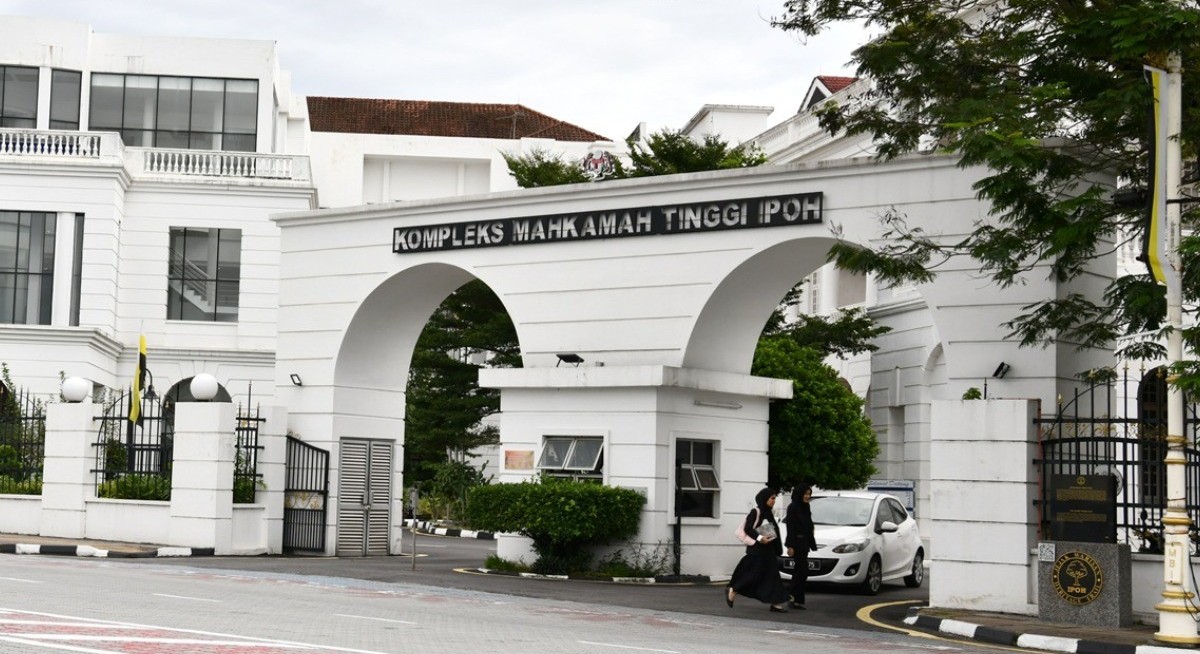



KUALA LUMPUR (July 7): Malaysian law considers gambling debts as “debts of honour” with no legal obligation to make good the debt.
Although a gambling debt may be lawful and enforceable in a foreign jurisdiction where it arose, it remains unenforceable in Malaysia because Section 26 of the Civil Law Act 1956 embodies the public policy of this country.
The Ipoh High Court has therefore ruled that it is bound by the Federal Court’s landmark decision in the Datuk Ting Ching Lee case that confirmed that gambling-related credit facilities are void ab initio (void from the very beginning) or not recognised.
High Court judge Moses Susayan allowed the appeal by 75-year-old judgement debtor Lee Fook Khuen to set-aside the bankruptcy proceeding instituted against him by Resorts World at Sentosa Pte Ltd and endorsed by the High Court’s senior assistant registrar on Feb 13 last year, for failing to pay a debt of $5.930 million (registered by the Singapore High Court in August 2018).
Lee had acquired a platinum-status credit facility of $10 million and incurred the debt through gambling at the island republic.
Lee did not appeal the judgement in Singapore, and it was subsequently registered at the High Court of Malaya through the Reciprocal Enforcement of Judgments Act 1958 (REJA) in November 2018.
See also: Malaysia eyes regional leadership in low-altitude economy as drone rules take shape
He tried to set aside the enforcement of the judgement but failed all the way up to the Federal Court, resulting in the casino trying to institute bankruptcy proceedings against Lee for non-payment.
Although Resorts World was successful in the bankruptcy proceedings following a decision by the Ipoh High Court’s senior assistant registrar on Feb 13 last year, Moses set it aside in May.
Ting’s apex decision came in March last year
See also: Listed in New York, tested by the market
By the time Moses set aside the bankruptcy, the Federal Court had already ruled in the Datuk Ting Ching Lee v Ting Siu Hua case in March last year and had authoritatively ruled that gambling-related credit facilities are not separate loan transactions but are part of a composite gambling contract, which is considered void ab initio.
Moses in his 26-page written judgement released on Monday (July 6) said since the High Court being the lower-court, the apex court’s decision binds the court to set aside the bankruptcy order, as gambling debts following credit facility are not recognised, even if they are incurred abroad.
Moses cited the apex court decision that said: "The reality of the transactions was that it was a gambling contract or a composite gambling contract when viewed in totality, where its purpose was no other than for gaming or wagering. In the circumstances, the said contract contravenes Section 26(1) and the first limb of Section 31(1) of the Contracts Act 1950, and as such was null and void from the beginning (ab initio).
“This court is satisfied that the judgement debt is founded upon a gambling-related credit facility which is void ab initio. It is therefore unenforceable in Malaysia and cannot lawfully serve as the basis for the present bankruptcy proceedings,” said the apex court in its Ting Ching Lee ruling.
Moses said Section 26 (1) of the Contracts Act stipulates that all contracts or agreements, whether by parol (verbally) or in writing, by way of gaming or wagering, shall be null and void, while Sub Section (2) says no action shall be brought or maintained in any court for recovering any sum of money or valuable thing alleged to be won upon any wager.
The judge said that if the debt is found to be based on an illegal or void transaction like a gambling contract, the court can refuse to enforce it as it is against public policy.
“The bankruptcy court retains the jurisdiction to examine the underlying nature of the debt even though it is registered under REJA,” the court said, adding that the prohibition against enforcing gambling debts take precedence over procedural finality.
To stay ahead of Singapore and the region’s corporate and economic trends, click here for Latest Section
“This court is of the clear view that where the law of the land declares a gambling contract to be null and void, such prohibition must be given full effect. There can be no indirect or disguised means of enforcement through the courts.
“Parties cannot circumvent the statute by re-characterising the transaction as a ‘credit facility’ or by any other label. To permit such an approach would amount to a backdoor enforcement of what the law expressly prohibits. This would undermine the statutory scheme and erode the clear public policy against the enforcement of gambling-related debts. The court must therefore reject any attempt to achieve indirectly what cannot be done directly,” Moses added.
Following the setting aside of the senior assistant registrar’s decision, the judge also made no order as to costs.
This, he added, is consistent with the principle that courts should not assist parties in disputes arising from transactions that are contrary to public policy by awarding costs.
Lee was represented by counsels Leong Cheok Keng and Chan Kok Keong, while Jasmine Kuan Jie Min appeared for Resorts World.
Chan confirmed when contacted by The Edge that Resorts World has filed a notice of appeal over Moses’ judgement.




