



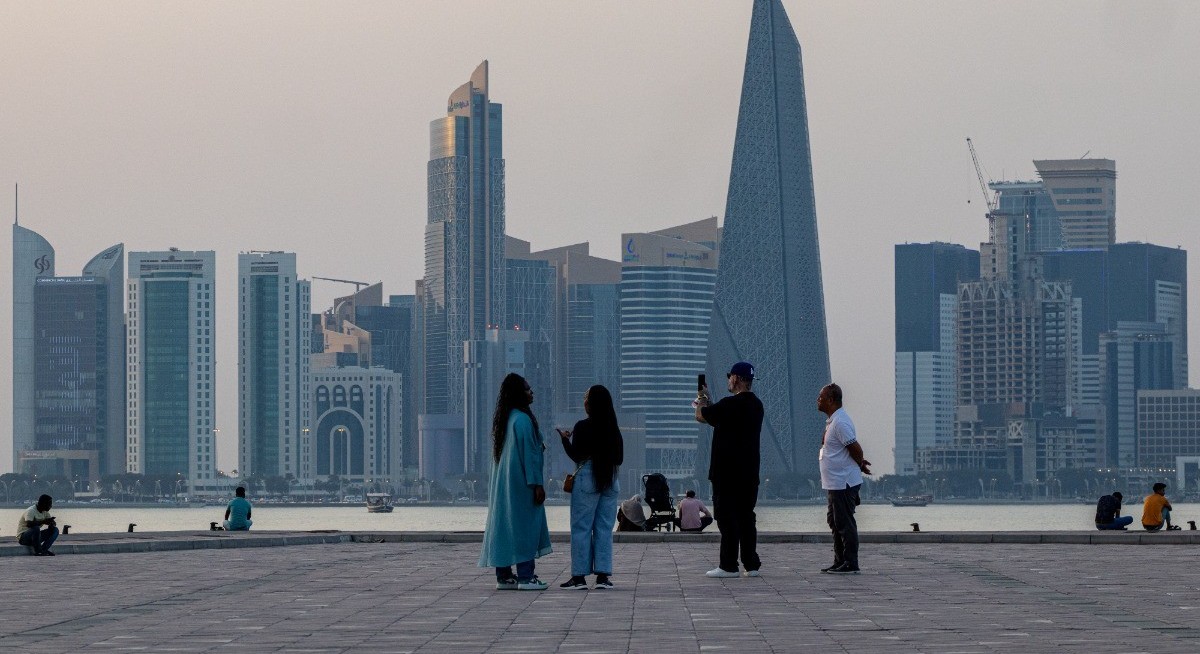



(June 29): US President Donald Trump said peace talks with Iran are set to resume on Tuesday in Doha, after both sides agreed to halt a series of tit-for-tat attacks over the Strait of Hormuz.
“Iran has requested a meeting,” Trump said on Monday in a post on Truth Social. “It will take place tomorrow in Doha.”
Shortly after, White House Press Secretary Karoline Leavitt told Fox News that Trump’s special envoy Steve Witkoff and son-in-law Jared Kushner will travel to the Qatari capital for high-level meetings on Iran, with technical discussions taking place on the sidelines.
She added that the president wants to see the peace process play out, but “violence will be met with violence”.
Iran has not confirmed the details of a fresh round of negotiations to permanently end the four-month war. Deputy Foreign Minister Kazem Gharibabadi said earlier that no technical talks have been scheduled, the semi-official Tasnim news agency reported.
The developments come after a flare-up in tensions threatened to derail peace negotiations. Last Thursday, Iran struck a Singapore-flagged container ship in the strait, prompting the US to retaliate and setting off a series of back-and-forth attacks. Tehran and Washington accused each other of breaching their agreement.
See also: Trump hails meetings in Qatar on Iran as talks set to continue
A US official who spoke on condition of anonymity said that both sides will stand down for now and vessels can move freely through the Strait of Hormuz. Axios had earlier reported on the agreement to halt fighting and resume talks.
Iran’s Islamic Revolutionary Guard Corps said on Sunday it launched missiles and drones at the Ali Al Salem Air Base in Kuwait and the 5th Fleet naval base in Salman Port, Bahrain.
Kuwait said it intercepted two missiles and there was no material damage or injuries. Bahrain reported a residential building had been hit, but said there were no fatalities.
See also: US says its negotiators had positive talks on Iran deal
The renewed attacks served as a reminder of the fragility of the US-Iran truce and of the uphill struggle shipowners face to restore traffic through the Strait of Hormuz, a key transit point for energy supplies. A fifth of the world’s oil and liquefied natural gas supplies was transported through the strait before the war began in late February.
Ships continued to move through the chokepoint on Monday, though fewer were broadcasting their passage than last week. Some companies said attacks over the weekend had made them less confident.
Traffic rose significantly after June 17, when Trump signed the memorandum of understanding with Iran aimed at concluding the war.
Oil retreated from session highs after the US and Iran agreed to stop mutual attacks and the prospects of a return to the negotiating table became stronger. Brent crude traded 0.9% higher at US$72.66 (RM295.80) a barrel.
“The market feels increasingly comfortable treating these moves as tactical rather than structural,” said Haris Khurshid, the chief investment officer of Chicago-based Karobaar Capital LP. “Until something fundamentally changes, traders are happy to fade both the rallies and the sell-offs.”

Vessels continued to push through the Strait of Hormuz despite an attack on a laden supertanker over the weekend.
To stay ahead of Singapore and the region’s corporate and economic trends, click here for Latest Section
Iran held its first meeting with Oman on the future management of the Strait of Hormuz, Iran’s Gharibabadi said on Monday in a post on X.
US, Europe and Gulf Arab nations are increasingly concerned about charges being imposed for the use of the strategic waterway, which would likely add to energy costs and risk creating a precedent for other countries. US Secretary of State Marco Rubio said last week in Bahrain that any tolls or fees would be unacceptable.
Oman has told European officials there’s no way of going back to the pre-war status quo and ships may have to be charged some fees, Bloomberg reported. In public, Omani officials say they will always abide by international maritime law.
Iranian Foreign Minister Abbas Araghchi visited neighbouring Iraq on Sunday and said the Islamic Republic is solely responsible for the restoration of Hormuz traffic. Any interference risks escalation, he said in a televised press conference alongside his Iraqi counterpart.
A ceasefire agreed last Friday between Israel, Lebanon and the US remains fragile, with Iran-backed Hezbollah militants calling it “void”. Lebanon’s Parliament Speaker Nabih Berri, Hezbollah’s main ally in the country, said the deal with Israel “simply won’t be implemented”, according to the Al-Akhbar newspaper.
Tehran has tied the end of hostilities in Lebanon to its own ceasefire with the US.
Uploaded by Tham Yek Lee




