









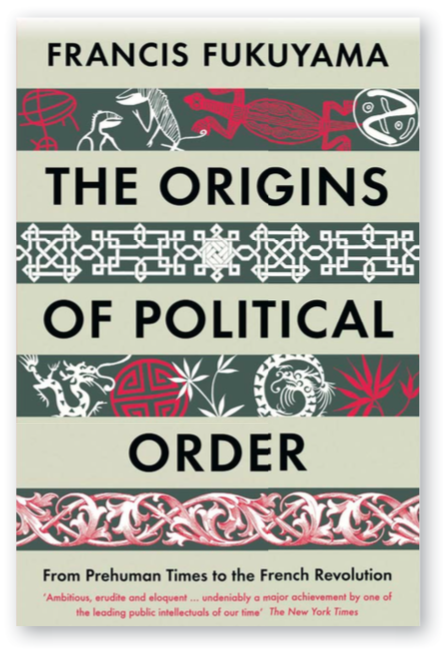
 “Politics is downstream from culture” and each society will tread its own path. But not all paths are sustainable. And herein lies Fukuyama’s key insight that a modern political system requires a strong state, the rule of law and democratic accountability. These are the three basic pillars of a successful and sustainable liberal democracy. The strong state is there to govern efficiently day to day. The rule of law establishes fairness, as no one, not even a president, is exempt. Accountability checks excesses, as a bad ruler can, periodically, be thrown out by the people.
The book traces the evolution of these mechanisms around the world from as far back in recorded history as we can go and what he offers is a nuanced story of how different pieces of the puzzle emerge in different parts of the world.
For example, the idea of a strong central state with an impersonal bureaucracy and civil service examinations first emerged in China two thousand years ago. The idea of a rule of law, as in a body of legal thinking that applies to rulers, just as it does to the ruled, did not emerge in China — a lack that still shows today. But it did emerge in India. And Europe was the first place where all three mechanisms came together for the first time: a rule of law, accountability and a strong state.
“Politics is downstream from culture” and each society will tread its own path. But not all paths are sustainable. And herein lies Fukuyama’s key insight that a modern political system requires a strong state, the rule of law and democratic accountability. These are the three basic pillars of a successful and sustainable liberal democracy. The strong state is there to govern efficiently day to day. The rule of law establishes fairness, as no one, not even a president, is exempt. Accountability checks excesses, as a bad ruler can, periodically, be thrown out by the people.
The book traces the evolution of these mechanisms around the world from as far back in recorded history as we can go and what he offers is a nuanced story of how different pieces of the puzzle emerge in different parts of the world.
For example, the idea of a strong central state with an impersonal bureaucracy and civil service examinations first emerged in China two thousand years ago. The idea of a rule of law, as in a body of legal thinking that applies to rulers, just as it does to the ruled, did not emerge in China — a lack that still shows today. But it did emerge in India. And Europe was the first place where all three mechanisms came together for the first time: a rule of law, accountability and a strong state.