
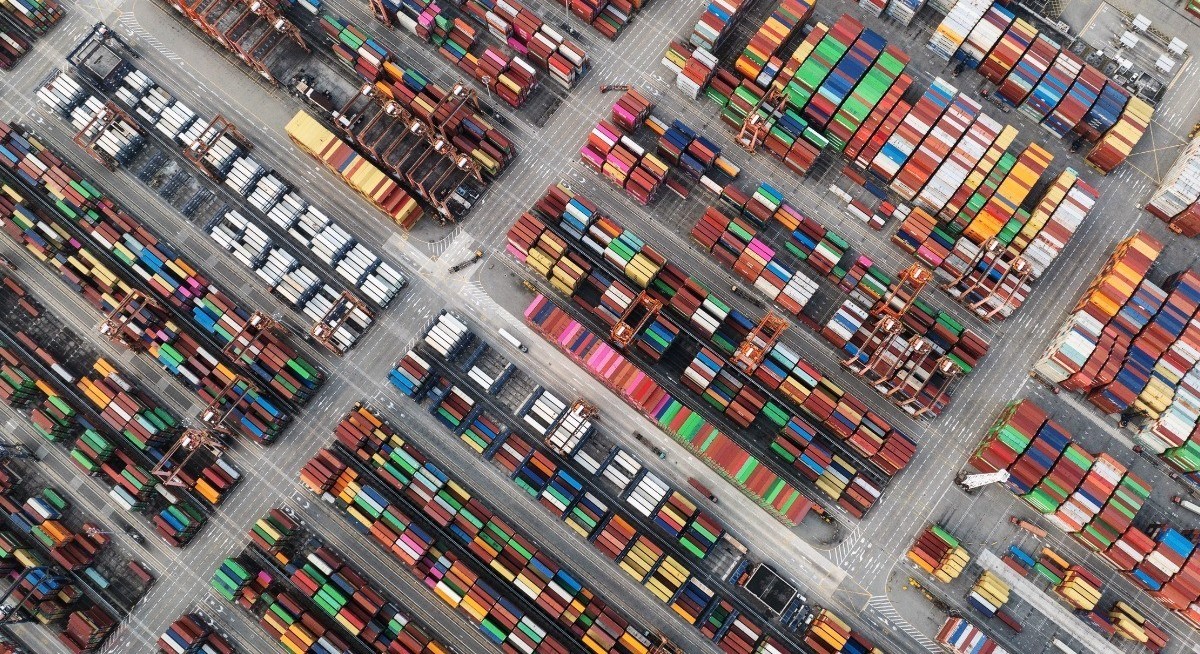

China’s massive trade surplus, which reached a record of US$1.2 trillion ($1.56 trillion) in 2025, has become a central fault line in its economic relations with other countries. As competition from Chinese imports increasingly weighs on domestic industries, French President Emmanuel Macron has warned that Europe faces a “Chinese tsunami” and called for a “rebalancing”. Policymakers across the continent have voiced similar concerns.
This pressure is unlikely to ease anytime soon. The Chinese economy is growing faster than that of its trading partners, so even if its current-account surplus remains stable as a share of China’s own GDP, its bilateral trade surpluses could continue to grow.
While China’s trade surplus is often attributed to its industrial policies and trade barriers, this explanation is misleading. Industrial policies do matter at the sector level, with government subsidies boosting exports in industries such as shipbuilding, solar panels and electric vehicles (EVs), but these gains do not necessarily translate into improvements in the trade balance.
The Lerner Symmetry Theorem, which states that import tariffs have the same long-term effects as export taxes, helps explain this pattern. Export subsidies tend to increase both exports and imports: as export sectors expand, they draw resources away from import-competing industries, which then contract, leading to greater reliance on imports. By the same logic, import restrictions often reduce both imports and exports. In other words, such measures primarily affect the composition of trade rather than its overall balance.
China’s own experience is a case in point. Since 2017, the government has actively promoted imports through initiatives like the China International Import Expo. While most countries use taxpayer-funded programmes to promote exports, few subsidise imports. But despite strong political backing, these efforts have done little to reduce China’s trade surplus, in line with the Lerner Symmetry Theorem.
To understand the persistence of China’s trade surplus, one must look beyond industrial policies. The key lies in the gap between national savings and investment, which determines the current-account balance. In China, investment is high by global standards, but its savings rate is even higher, exceeding 40% of GDP.
See also: PBOC injects cash despite flush liquidity, fuelling bond rally
China’s high household savings rate is driven by structural forces, such as its skewed sex ratio. Decades of strict family-planning policies, combined with a cultural preference for sons, have created a surplus of men. The resulting imbalance has given rise to what I call a “competitive saving motive”, as families with sons save aggressively to improve their children’s prospects in an increasingly tight marriage market. These pressures often spill over to households with daughters and those without young children, raising the national savings rate.
The numbers tell a clear story: regions with higher male-to-female ratios consistently exhibit higher household savings rates, and households with sons tend to save more, especially where the gender imbalance is most pronounced. This factor alone may account for up to half of the rise in China’s savings rate since the 1990s, yet it is rarely acknowledged in policy discussions.
A structural factor behind China’s high corporate savings rate is financial underdevelopment. The country’s financial system has long favoured state-owned enterprises, leaving private firms, which are often more productive, with limited access to credit. As a result, many firms must rely heavily on retained earnings to finance investment.
See also: China’s ‘national team’ cut ETF stakes below 20% disclosure mark
Together, these forces generate a sustained gap between savings and investment, which, in today’s globalised economy, manifests as a large trade surplus. Government savings, by contrast, play a limited role, as they have been negative for many years and thus contribute little to the overall surplus.
Could increased government spending, particularly on social programs, help reduce China’s trade surplus? To some extent, yes. Higher public spending would lower government savings and diminish households’ need for precautionary savings. But this approach has its limits. China’s social spending is already broadly in line with that of other middle-income countries, and moving toward a Western European-style welfare model could weaken incentives to work, innovate, and invest, thereby slowing growth.
To be sure, short-term measures such as monetary and fiscal stimulus could boost domestic demand and imports, temporarily narrowing the trade surplus. But a lasting solution requires deeper structural reforms to address the gender imbalance and improve private-sector firms’ access to finance. While these reforms will take time to bear fruit, without them, China’s trade surplus is bound to remain a source of friction for years to come. © Project Syndicate, 2026
Shang-Jin Wei, a former chief economist at the Asian Development Bank, is professor of finance and economics at Columbia Business School and Columbia University’s School of International and Public Affairs


