

Floating Button
Home Views Markets

Beyond the index: some way to go for most to meet institutional standards

Lee Ooi Keong
Lee Ooi Keong • 11 min read
Beyond the index: some way to go for most to meet institutional standards
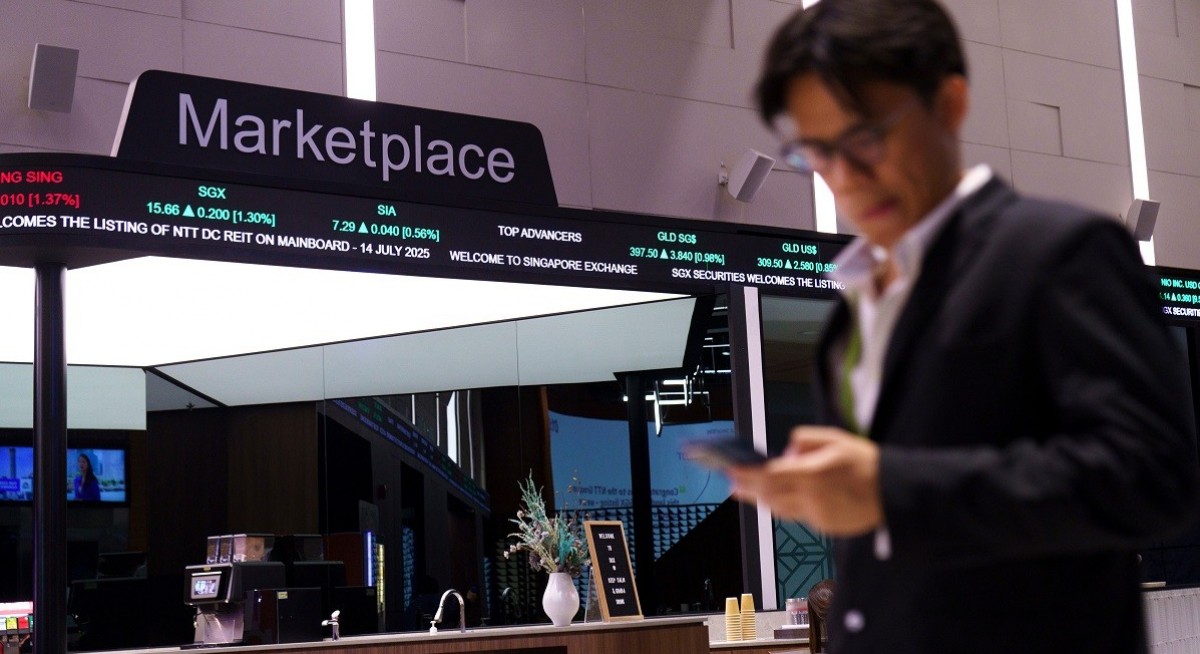
This is not a judgment about individual management teams. It is a description of the market’s structure that boards, investors and policymakers need to confront / Photo: Bloomberg
Font Resizer
Share to Whatsapp
Share to Facebook
Share to LinkedIn
Scroll to top
Follow us on Facebook and join our Telegram channel for the latest updates.

Singapore’s equity market delivered its best performance in more than a decade in 2025. The Straits Times Index (STI) returned 22.7%, liquidity improved, and new listings finally exceeded the drought of recent years.

My earlier article examined this rebound from a top-down perspective and highlighted how concentrated the Singapore Exchange (SGX) has become, with the top 10 companies accounting for 53% of total market capitalisation and the top 80 counters representing 85% of market value. That concentration reflects where capital chooses to be. The more fundamental question for boards and investors is: why?

This article looks at SGX from the bottom up. Using a simple, mechanical screen: return on equity (ROE) of at least 8%, approximating Singapore’s long-term cost of equity, market capitalisation above $500 million, reflecting typical institutional liquidity and float requirements, we map the quality of SGX’s 613 listed companies into four distinct tiers.

The findings show that only 68 companies (11% of the exchange) meet both profitability and scale criteria. A further 103 are profitable but sub-scale. The remaining 442 companies, or 72% of listings, either destroy value, lack institutional scale, or are loss-making. This is not a judgment about individual management teams. It is a description of the market’s structure that boards, investors and policymakers need to confront.

SGX’s quality pyramid

See also: The buyback mirage? New SGX data shows why patience pays

When we segment SGX’s 613 companies by ROE, profitability and market capitalisation, a clear hierarchy emerges.

Tier 1 — High-quality institutional grade: 68 companies sit at the apex of the domestic stock market, comprising profitable companies with ROE of 8% or more and market capitalisation above $500 million. They make up 11% of listed companies but command about 66% of SGX’s aggregate market capitalisation, or $813 billion. They are the true core of SGX’s investable universe; the companies that meet institutional mandates for size, liquidity, free float and profitability.

Tier 2 — Quality orphans: Also earning ROE above 8% but with a market capitalisation below $500 million, these companies are earning above the cost of capital but remain sub-scale. Together they represent 17% of all listings (103 companies) yet account for just 1% of the total market. This is the market’s orphan tier: fundamentally sound businesses that institutional capital overlooks purely on size and liquidity grounds.​

See also: Liquidity trumps fundamentals as Singapore market delivers the best returns in a decade

Tier 3 — Value destroyers: 196 companies (32% of listings) that are profitable on an accounting basis but earn ROE between 0% and 8%, below a reasonable cost of equity. Collectively, they hold $282 billion (23% of market capitalisation) and trade at an average price-to-book ratio of 0.86 times, a clear signal that the market recognises these businesses are not creating economic value despite reported profits.

Tier 4 — Zombies: 246 loss-making companies (40% of listings) with a combined market capitalisation of about $116 billion, or 9% of the exchange. This tier includes 48 companies classified as suspended, representing about $2.8 billion in “stranded” market capitalisation.

The result is a highly asymmetric structure where 11% of total listings support 66% of SGX’s total market capitalisation.

The size–quality cliff

The picture becomes even clearer when we look at market capitalisation bands. Of the 326 companies (53% of listings) with a market capitalisation below $100 million, 192 are loss-making (about 59% of this cohort). Together, the 326 companies represent roughly $10 billion of market capitalisation, or about 1% of the total market. In other words, more than half of SGX’s listed entities sit in the sub-$100 million segment, yet their combined economic footprint is negligible (see Chart 2).

Above $100 million, the economics change materially. Among the 287 companies in this range, 54 are loss-making, implying a loss-making rate of 19%. The $100 million mark thus functions as a clear size-quality threshold: below it, almost six in 10 companies lose money; above it, roughly two in 10 do.​

Sink your teeth into in-depth insights from our contributors, and dive into financial and economic trends

The micro-cap segment is where these dynamics are most extreme. For most institutional investors, this segment is effectively off-limits on size and liquidity grounds, regardless of individual company stories. The practical implication is that the investable universe for institutional mandates is much narrower than the headline number of 613 listings suggests.

Why Tier 2 companies remain quality orphans

The 103 Tier 2 companies are profitable and well-run, yet they attract negligible institutional interest. Part of the answer is structural: effective free float.

Singapore requires at least 10% of shares to be held in public hands; if this falls below 10%, SGX may suspend trading and the issuer has three months to restore the threshold or face delisting. At 10%, Singapore’s minimum free float is lower than regional peers: Bursa Malaysia and Hong Kong both require 25%.

Low free float reduces liquidity and amplifies governance concerns for minority shareholders, while also reducing index weights under free-float-adjusted methodologies. MSCI uses free-float-adjusted market capitalisation, so companies with low public shareholding receive much smaller index weights than their headline valuations suggest.

Indonesia offers a cautionary parallel. The country’s minimum free float is 7.5%, lower even than Singapore’s 10%. In January, MSCI warned it may reduce Indonesia’s weighting in emerging market indices or downgrade the market to frontier status, citing “fundamental investability issues” related to ownership transparency and low effective free float. Indonesian regulators have since committed to raising the minimum free float requirement in stages, targeting 10%–15% initially and ultimately 25%, explicitly benchmarked against Hong Kong and India.

The Equities Market Review Group has cautioned against a blunt step-up in minimum free float, acknowledging a possible relationship between actual float and liquidity but arguing that the link between higher regulatory minimums and liquidity is much less clear and that raising minimums could create downstream consequences.

That caution helps explain why the reform package emphasises research coverage and investor-relations capability-building rather than mandated sell-downs. The data in this article point to a complementary constraint: for many Tier 2 companies, the binding issue is that sub-scale market capitalisation and tightly held share registers limit institutions’ ability to build positions at size, regardless of investor relations effort.

A subsequent article will examine the Monetary Authority of Singapore (MAS) Equities Market Review Group’s measures in full, including the trade-offs behind its cautious stance on minimum free float, and whether the package is sufficient to broaden SGX’s institutional investable base beyond the current narrow core.

Singapore’s 10% threshold is formally adequate but functionally restrictive. For Tier 2 companies hovering near the minimum, materially higher free float is essential to attract institutional capital. The gap between these 103 companies (1% of market capitalisation) and the 68 institutional-grade names (66%) reflects not just size but also float and governance.

Mainboard versus Catalist: Quality divergence

Singapore’s two-board structure was designed to distinguish between established Mainboard issuers and earlier-stage growth companies on Catalist. In practice, the quality gap has widened sharply (see Chart 3).

On the Mainboard, 283 (69%) of 409 companies are profitable and 132 (32%) deliver ROE above 8%. On Catalist, only 84 (41%) out of 204 counters are profitable and 49 (24%) generate ROE of 8% or more.

Yet Catalist accounts for a third of SGX listings but only $9.5 billion, or about 1% of total market capitalisation. In other words, most of the exchange’s economic value and return on equity is concentrated on the Mainboard; Catalist is numerically large but economically small and riskier.

SGX data suggests that, as of January 2025, of the nine Catalist companies that advanced to Mainboard in a decade, several have since faltered: Halcyon Agri has been served with a delisting notice, and Keong Hong Holdings is still loss-making (previously under watchlist). However, twice as many Mainboard companies (17) have been demoted to Catalist, highlighting Catalist’s transformation from a growth platform to a rehabilitation house for struggling companies.

The aggregate statistics tell the story: Catalist has a higher incidence of loss-making companies and accounts for less than 1% of market capitalisation despite being a third of all listings.
For policymakers, this raises a question: Is Catalist functioning as a growth pipeline or as a rehabilitation zone for companies that cannot meet Mainboard standards? For sponsors and boards, the implication is sobering: graduation from Catalist to institutional-grade status requires not just revenue growth but demonstrable returns on capital and a credible path to meaningful float and liquidity.

Suspensions, delistings and regulatory evolution

As at Dec 3, 2025, 48 companies (8% of all listings) were suspended, representing $2.8 billion of market capitalisation. In September 2025, SGX RegCo indicated it was reviewing long-suspended cases for resumption or delisting.

Historically, suspensions persist for seven to 10 years before resolution. China Environment was suspended in June 2016 and delisted in July 2024; Swiber was suspended in 2016 and delisted in June 2023. Earlier S-chip cases followed similar timelines. Two names remain suspended after more than a decade. Pacific Andes Resources Development and China Fishery Group have both been suspended since November 2015, with plan administrators indicating eventual liquidation and delisting but no dates yet announced.

ASTI Holdings, suspended in July 2022, successfully resumed trading in January after restructuring, a rare positive outcome.

Against this backdrop, SGX RegCo’s recent policy shift is significant. In October 2025, SGX removed the financial watch-list regime, shifting to a disclosure-based approach. Loss-making alone no longer triggers watch-list placement; suspensions now require the ability to substantiate going-concern assumptions to SGX RegCo’s discretion.

Sectoral patterns

The quality issues are not confined to any single sector. Loss-making companies account for at least 30% of listings in every sector, and more than 40% in sectors such as utilities, technology, communication services, basic materials, consumer and healthcare, reinforcing that SGX’s investability problem is structural rather than sector-specific.

For boards, these sectoral patterns are a reminder that sector labels alone do not confer quality. For investors, genuine diversification on SGX is not simply a matter of owning one or two names in each sector; it requires discriminating within sectors and recognising that the bulk of value creation, at least for now, is concentrated in a few financial and industrial names.

What this means for investors and policymakers

For institutional investors, the message is straightforward. Singapore remains investable, but in a narrow band of 68 companies that account for two‑thirds of market capitalisation. As long as the rest of the market is dominated by sub-scale or loss-making firms, this concentration will persist.

For boards of smaller listed companies, the question is what path exists to join that core. The data suggest three levers: sustaining ROE above 8%, lifting market value beyond roughly $500 million, and expanding free float meaningfully above the 10% minimum so that institutions can build positions without distorting prices. Without progress on these fronts, it is hard to see why large institutional investors would move beyond a handful of familiar names.

For retail investors, the facts are sobering: 40% (246) of SGX companies are loss‑making and 196 (32%) earn less than their cost of equity despite reported profits. Stock-picking remains possible, but realistic expectations and rigorous due diligence are essential.

For regulators and policymakers, the questions are harder. The empirical evidence raises questions about market design and whether SGX’s listing framework is delivering the breadth and quality that policymakers want. The structural issues highlighted merit serious consideration:

Should Singapore’s 10% minimum free float requirement be lifted? At the region’s low end, Tier 2 companies may remain structurally uninvestable without higher thresholds.
How quickly should SGX work through the stock of long-suspended issuers, some of which have been in limbo for close to a decade? The September 2025 review is welcome, but the fact that companies can remain suspended for a decade raises questions about regulatory forbearance. A clearer, time-bound framework for resolution, whether through restructuring, resumption or delisting, would reduce uncertainty for minority shareholders and improve market hygiene.

Is Catalist’s current structure viable? With 59% of companies loss-making and only 1% of SGX’s market capitalisation, Catalist risks becoming a dead end rather than a growth pathway if current trends persist.

These are uncomfortable questions, but they go to the heart of whether SGX can broaden its institutional core beyond the current 11% of listings.

The market concentration discussed in my previous article and the quality stratification shown here are two sides of the same coin. Capital flows to quality, and on SGX, quality is concentrated in 68 names. Broadening that base, through higher free float requirements, stricter governance standards, and decisive resolution of legacy suspensions, is the only path to a deeper, more resilient market.

Lee Ooi Keong is an Independent Director of an SGX Mainboard-listed company with 30-years of experience in corporate performance, investments and risk management. He is also the founder and MD of Clover Point Consultants, an independent Board and C-Suite advisory firm. Lee was also formerly a Director of Risk Management in Temasek for over 16 years.

×
The Edge Singapore
Download The Edge Singapore App
Google playApple store play
Keep updated
Follow our social media
© 2026 The Edge Publishing Pte Ltd. All rights reserved.

