

Floating Button
Home City and country Data centres

Mega-what? Capex, depreciation could rise as data centres focus on AI

Goola Warden
Goola Warden • 14 min read
Mega-what? Capex, depreciation could rise as data centres focus on AI
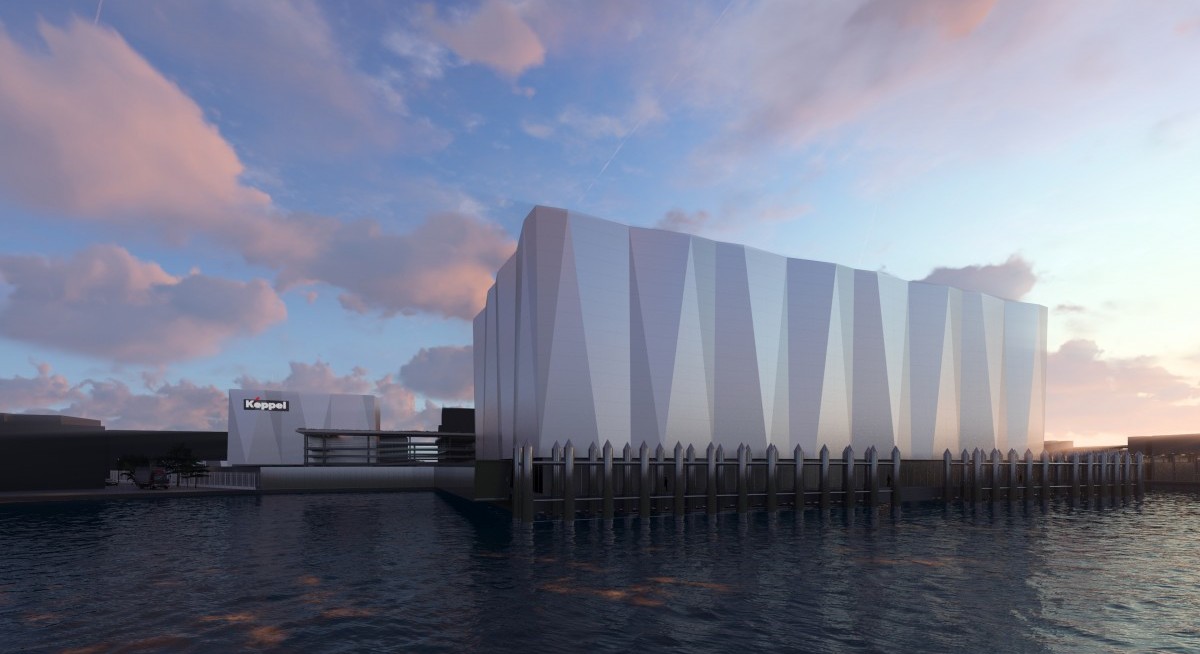
Data centre REITs have been sold to retail investors as typical real estate plays, but are REIT managers here telling you the full story about the capex required to keep their assets relevant? Photo: Keppel
Font Resizer
Share to Whatsapp
Share to Facebook
Share to LinkedIn
Scroll to top
Follow us on Facebook and join our Telegram channel for the latest updates.

Data centre developments today are much more capital-intensive than in the past. The costlier fit-out means REIT managers and investors must account for more depreciation

Data centres in REITs provide investors with a conundrum. These buildings form a major part of the value chain for artificial intelligence (AI); they also house the cloud, which powers a large part of our digital life: social media, banking and financial services, and e-commerce are just some of the daily tasks we use data centres for.

On the other hand, the cost to build and maintain data centres at highly sophisticated levels is likely to accelerate.

Already, the fit-out of a data centre costs many times the land and building’s value. As a case in point, Keppel DC REIT paid $350 million for a 10-year extension for the land tenure of KDC SPG 7 and 8 in Genting Lane. Of this, the upfront land premium was $9.9 million.

Investing in data centres is not like investing in a commercial or industrial REIT. The infrastructure such as the servers, networking systems, racks, cooling systems, generators, power supply, power generators, water and so on is key to a data centre’s functioning — and valuation.

See also: CFO of NTT DC REIT’s manager explains capital management, leasing and other strategies

Unlike net lettable area (NLA) or gross floor area (GFA), IT capacity is measured in kilowatt-hours or megawatt-hours, and data centre use is analysed in terms of the amount of power in megawatt (MW) that it needs to function.

Benjamin Chow, head of private assets research for Asia at MSCI, points to the increased specifications of data centre fit-out, which has raised the development cost per MW materially.

“Data centre developments today are much more capital-intensive than in the past, often requiring billions of dollars of investment and, consequently, much larger equity- and debt-raising exercises,” he says. “The capital-intensiveness of the data centre’s fit-out means more depreciation for investors to account for.”

See also: Data centres: Do investors know what they’re getting into?

Chow raises an intriguing question. “Investors have baulked at the substantial amount of capital expenditure (capex) required to refurbish office buildings following the pandemic era or risk their falling into obsolescence. Could the same theme repeat itself several years down the road, when hyperscale customers approach the end of their leases and real estate owners are left with building shells fitted out with by then-outdated cooling and electrical systems?” he wonders.

Before the listing of NTT DC REIT in 2025, data centres in S-REITs were valued on a psf of NLA basis.

“Historically, it has been traditional for the REITs to report occupancy in terms of psf. And, for the longest time, depreciation and capex were not as big a factor as they are today, because the value of the fitout used was probably worth less than the building,” Chow observes.

However, data centre capex has skyrocketed. Annual spending on data centres alone could increase by between US$100 billion ($126.3 billion) and US$225 billion a year in the next five years, according to forecasts cited in a Bank of International Settlements (BIS) report released in January titled Financing the AI boom: From cash flows to debt.

By mid-2025, expenditures on IT manufacturing facilities and data centres including both equipment and construction costs were equivalent to 1% of GDP,” adds BIS, referring to the US GDP estimate of US$30.5 trillion.

BIS points out that the sheer size of these actual and anticipated investments, combined with dwindling free cash flows in some cases, are testing the limits of expansion.

“Free cash flows have recently lagged capital expenditures in absolute amounts. Equity financing may in turn be neither timely nor cost-effective at the current juncture. AI valuations are volatile and concentrated, issuance windows are narrow and new stock sales can be costly and dilutive for long-dated, asset-heavy projects,” BIS warns.

“We also see that the requirements for data centres have gone up, and that means that the fit-out becomes more expensive. In this particular climate, it becomes a lot more necessary to disclose things like capex,” Chow suggests.

How valuers value data centres

According to Cynthia Soo, deputy managing director of valuation and advisory at Savills Singapore, a data centre is analysed based on rate per kilowatt (kW) or MW instead of per sqm or psf.

“The key valuation considerations are data centre tier standard, power capacity, power usage effectiveness (PUE), network connectivity, quality of tenants, revenue, operating expenses, occupancy, capital expenditure and the land lease tenure,” she says.

Depreciation of data centre infrastructure can impact data centre valuation. Examples of depreciation of data centre infrastructure may include high-value infrastructure, such as servers, cooling systems, power equipment and even the building itself.

Technological obsolescence, costly upgrades and overhauls are the potential consequences, Soo says.

“Depreciation of data centre infrastructure may pose operational and financial risks, affecting client retention, frequency of breakdowns, rentals and capital expenditure, et cetera, if it is not well-addressed or managed. These will have an impact on the market value of a data centre,” Soo outlines.

The type of data centres S-REITs invest in depends on their sponsors’ ability to build and operate data centres. The sponsors of Keppel DC REIT, Digital Core REIT (DC REIT) and NTT DC REIT are operators of data centres. Most of the data centres in these REITs are co-location or fully-fitted data centres, with a small portion of shell-and-core.

“Co-location and fully-fitted data centres are different from shell-and-core because of the amount of infrastructure required to make them relevant. They incorporate significantly more built-in infrastructure — such as cooling systems, power distribution, backup generators, fibre connectivity, raised floors and security systems. This additional infrastructure is central to the valuation,” Soo explains.

Within REITs, assets are valued based on the cash flow/income they produce with a discount rate discounting the cash flow to a net present value.

Similarly, the quality of a data centre’s infrastructure is capitalised into its valuation, as it directly influences rental yields.

Superior infrastructure enhances both occupancy levels and market demand, thereby supporting stronger co-location revenues.

Facilities equipped with robust power systems are capable of hosting higher-density workloads, allowing operators to charge higher rates based on power usage, leading to higher valuations, Soo points out.

The lifespan of plant and equipment is explicitly considered through capital expenditure for replacing and/or upgrading plant and equipment (e.g. every 10–20 years for electrical/HVAC, more frequently for IT components), which is reflected in capital expenditure assumptions in the income approaches to valuation.

Short, fully-fitted/co-location centres require explicit consideration of short-lived, critical infrastructure with higher depreciation and reinvestment needs, while the focus of the shell-and-core is more on long-lived structural elements, Soo indicates.

“Data centres offering premium managed services — such as cybersecurity, disaster recovery and compliance support — can command additional income streams. These three income drivers — co-location revenue, power-based charges and managed services — collectively influence the overall market value of a data centre,” Soo says.

Financial reporting standards

According to Terence Lam, director of professional standards and advocacy at the Institute of Singapore Chartered Accountants (ISCA), there are no specific depreciation rules for data centres and infrastructure assets.

Instead, it depends on the substance of how the asset is used. If a data centre is held mainly to earn rental income and/or for capital appreciation, it is typically accounted for as investment property.

In this context, entities can record the property at fair value, where valuation gains and losses go through profit or loss and no depreciation is recorded; or to record the property at its cost, less depreciation and any impairment in the value of the property, Lam points out.

“However, if the asset is mainly used to provide services, which is common for infrastructure assets, the asset would instead be accounted for as property, plant and equipment (PPE),” Lam says.

For PPE, entities choose either a cost model, where the asset is depreciated over its useful life and its value declines rather systematically over time, barring any impairment in value; or a revaluation model, where the asset is still depreciated, but also revalued periodically so the carrying amount remains close to fair value.

When asked how auditors think about how data centres should be valued, Lam says that auditors do not decide whether the asset should be carried at fair value or depreciated. “Their role is to evaluate whether management has applied the appropriate treatment based on the nature of the assets, and whether the policy choice is applied consistently and disclosed clearly.”

Where fair value is used, auditors would focus on the valuation methodology and key assumptions applied, such as discount rates, occupancy and capex assumptions.

This typically includes assessing the work of independent valuers, Lam answers.

“When the asset is subject to depreciation, auditors assess whether the useful lives and residual values are reasonable, and whether there is indication that the asset may be impaired,” Lam says.

Noteworthy is that NTT DC REIT reports depreciation similar to infrastructure trusts like Keppel Infrastructure Trust.

An NTT DC REIT asset in Singapore

Meanwhile, Keppel DC REIT and DC REIT do not report depreciation. Instead, they opt for fair value, where valuations are impacted by the income the assets command.

Separately, Keppel DC REIT has a capex reserve and — since FY2025 — an upfront land premium reserve, albeit at around 5% of income available for distribution.

NTT DC REIT announced a maintenance capex of $32 million over two years when it listed in 2025. Masayuki Ozaki, CFO of NTT DC REIT’s manager, has said that the REIT will set aside maintenance capex.

During a results briefing on Feb 4, John Stewart, CEO of DC REIT’s manager, says his policy is not to establish a capex reserve. “There can be capex requirements over time. We basically pay out 100% of our distributable income, and fund capex separately as needed.”

For instance, in January, DC REIT announced a US$40 million capex for Linton Hall, including a 13% increase in its saleable capacity for a new tenant who will move in on Dec 1.

Most REITs add the capex to the valuation of the property. In this event, capex is capitalised in the balance sheet and distributions are not affected except for higher interest cost from additional debt.

As such, it is common market practice for REITs to apply the fair value model to their investment properties. In this event, any degrading/depreciation of the infrastructure or fit-outs is reflected in lower rents and as a result, lower valuations.

“There may be certain data centre co-location arrangements that require the REIT manager to provide significant ancillary services. In that scenario, the data centre might be viewed as being used in the provision of services, and accordingly recognised as PPE instead and depreciated,” Lam says.

“Using a simple analogy, if an owner leases a hotel building to an operator for rental income, it would be an investment property. If the owner instead operates the hotel and sells hospitality services, the hotel would be accounted for as PPE, with depreciation,” Lam explains.

Should pure-play data centre S-REITs’ financial reporting be more in line with infrastructure trusts so that investors are aware that the valuation of data centre assets can decline as they age?

“There is no single superior model here,” Lam answers. “Technically speaking, the decline caused by age or inefficiency should be reflected through the valuations, even if there is no depreciation recorded. Having said that, data centres do not just age physically, they also age technologically. Investors would therefore benefit from increased visibility on future capex needs and how the REIT plans to fund them.”

Capex and depreciation

Are valuations based on psf of NLA and investment property valuations for data centres fit for purpose? Market participants’ wish list is for data centre capex and depreciation to be taken more seriously by REIT managers and analysts.

As a comparison, an extensive renovation for offices and hotels could cost something like 20%–25% of the building value. “For fully-fitted data centres, this could be as high as five to 10 times of the building value,” Chow warns. “In our database, we have a number of examples of turnkey data centres whose value has plummeted, presumably due to their owners not maintaining or refurbishing these assets in keeping with the times.”

The steep declines in values for these assets are in part to do with the high value of data centre fit-out relative to the building.

“For S-REITs specifically, this means that the apparently higher yields from owning fully-fitted data centres need to be considered against the increasingly exorbitant value of the fit-out. Many components of the fit-out, such as batteries, cooling systems and electrical systems, necessarily need to be replaced over time. These costs look small at the start of the asset’s lifespan, but quickly escalate as the asset ages. Moreover, as newer technologies are introduced (like available cooling or electrical upgrades), the gap between old and new becomes even bigger,” Chow cautions.

Obsolescence in data centres is not a new trend, usually dealt with at the data centre operator level. Depreciation is universal to all infrastructure assets.

But, data centre REITs — which have been sold to retail investors as real estate — valued data centres like real estate, up till the IPO of NTT DC REIT.

REIT managers and investors will have to start dealing with depreciation, given the capex required to keep their data centres relevant, market watchers say.

“Some of the new entrants (data centre REIT investors) don’t fully internalise what it means for 75% or 80% of your asset’s value to be depreciating towards zero,” Chow points out.

REITs have to pay out 90% of their distributable income for tax transparency purposes. Should all data centre REITs be asked to withhold some distributable income given their regular capex requirements? Or should REIT managers disclose the downsides of investing in data centres such as regular capex top-ups, or distribution cuts in order to fund capex?

“Specifically, turnkey or fitted data centres should disclose their capex projections, or the sort of capex required as that is fundamental to valuations as the disclosures are an important consideration behind data centre investment,” Chow says.

He believes that eventually, data centre investors will have to take depreciation into account.

All the pieces of the fit-out depreciate at different rates. “Some depreciate very quickly. You have things like cooling systems [last] maybe 20 years... These things inevitably wear out over time and will need replacing. So, it doesn’t make sense to not take these things into account,” Chow points out.

If a data centre REIT, like some of those in Singapore, is buying relatively new turnkey assets, then it is true that for the first five years of the asset, less capex is required.

In addition, Keppel DC REIT’s FY2025 results indicate very strong demand in Singapore. The REIT reported a 45% growth in rental reversions in FY2025, supported by Singapore. Keppel DC REIT’s distributions per unit rose by 9.8% in FY2025, despite two rounds of capital raising within a 12-month period.

What should investors do? Singapore’s data centres are in a unique position. The island is the most connected country in Asia as the landing point for 35 undersea cables. Land, water and power are relatively scarce resources compared with the likes of Johor and Batam.

Hence, data centre owners like Keppel DC REIT and Singapore Telecommunications may not need to undertake that much capex if the assets are new.

“But in terms of when you’re exiting the asset, the next buyer will have to take these capex considerations into account. And if you did not continually maintain and upgrade the asset throughout the first five years, then you can expect that the cap rate will be significantly higher or the price will be significantly lower at the exit,” Chow says.

As landlord, manager and/or operator, the underwriting will affect the exit cap rate. More importantly, though, is to ensure the average retail investor understands the risk of investing in a data centre REIT.

“It’s all part of educating people on the different types of assets that they are investing in. REITs, historically, are supposed to have been investing in real estate and arguably fitted data centres have always been the domain of infrastructure investors,” Chow concludes.

Read more about data centres and S-REITs:

Data centres: Do investors know what they’re getting into?

What to look out for when investing in data centres

No silver bullet, but silver linings exist in data centre financing

Data centre value chain comprises more than just REITs

CFO of NTT DC REIT’s manager explains capital management, leasing and other strategies

NTT DC REIT is not like other REITs with US assets, say CEO and CFO of manager

Keppel DC REIT's DPU rises 9.8% in FY2025 after setting aside capex and ULP reserves

×
The Edge Singapore
Download The Edge Singapore App
Google playApple store play
Keep updated
Follow our social media
© 2026 The Edge Publishing Pte Ltd. All rights reserved.

