



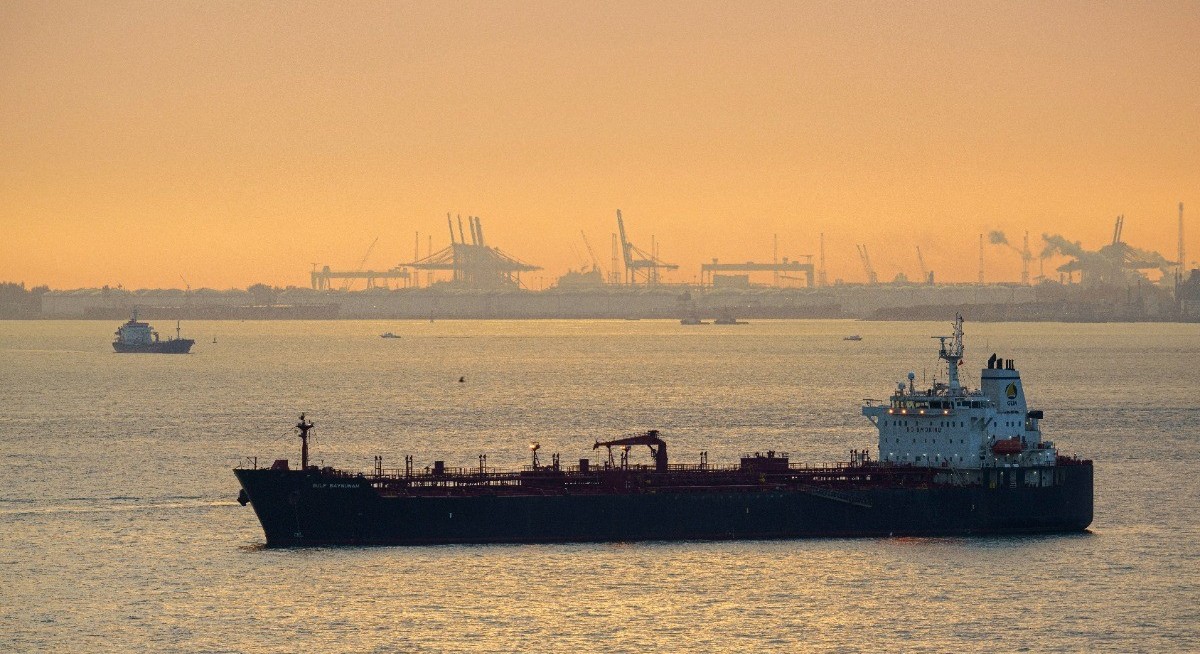


(April 10): Australia is reinforcing links with its northern neighbours to secure fuel supplies and bolster defence ties as a US administration grows increasingly preoccupied with — and potentially weakened by — the war in Iran.
Prime Minister Anthony Albanese and his senior ministers have been hitting the phones and travelling across Asia to ensure key trading partners maintain shipments of diesel and gasoline amid global supply disruptions. Albanese went to Singapore to meet Prime Minister Lawrence Wong on Friday and is expected to travel to Brunei next week.
The visit to Singapore was earlier than planned and came after the two leaders spoke in March on ensuring continued energy flows. After the meeting, they announced a new agreement to support the stable supply of essential goods, including energy and food, according to a joint statement, with Wong emphasising that this mutual support would strengthen energy security of both nations.
The burst of diplomatic activity not only secured essential energy supplies but also underscored the Albanese government’s reorientation of foreign policy toward its region — both to limit China’s sway and boost Australia’s influence. The shift has gained greater significance during the Trump administration, when US commitment to traditional alliances appears more tenuous.
Albanese said trusted ties with Singapore help to “deliver energy security for both of our nations”. He said his government’s efforts to build links with the region meant the country was better placed to deal with shocks, pointing to relations built through repeated meetings with leaders such as Wong.

See also: Xi helps Trump on Iran war as China assists in ceasefire bid
The two sides also discussed deepening defence cooperation, including allowing Australian naval vessels to use Singapore’s port, Albanese said.
That linkage of trade and security can be seen elsewhere. Australian Defense Minister Richard Marles travelled to Tokyo this week for last-minute talks on the fallout from the Middle East conflict, regional security challenges and deeper defence cooperation with Japan.
Meanwhile, Australian diplomats in Indonesia appear to have convinced Jakarta to guarantee supplies of fertiliser and its component urea, which is critical for farmers planting winter crops, the Australian newspaper reported.
See also: Dollar moves in lockstep with oil prices after Iran war surge
“The Albanese government’s foreign policy has been quite smart in prioritising its own neighbourhood,” said Bryce Wakefield, head of the Australian Institute of International Affairs and an expert on Japanese foreign policy.
It has also meant Australian officials can pick up the phone and reach an agreement, he added.
The focus on Southeast Asia and the broader region is paying off in a series of security deals with Indonesia, Papua New Guinea and others, and in Canberra’s success in ensuring nations continue exporting fuel to Australia despite worsening regional shortages.
Albanese pointed to his centre-left government’s record last week, arguing that Australia had cemented ties with North Asia trading partners such as South Korea and Japan, while maintaining links with “traditional partners” the US and the UK.
The Marles trip to Tokyo is another example. Australia had already secured Japan’s agreement to keep shipping energy as normal, but the defence minister’s fifth meeting with his counterpart Shinjiro Koizumi underscored the serious security challenges facing the Asia-Pacific.
Even with China, which has mostly banned exports of refined fuels, Canberra was able to secure a promise to “increase government-to-government communication so that Australia and China are both working in support of regional energy security,” although it remains to be seen whether that leads to trade resuming.
Part of the Albanese government’s success has been linking Singapore and other suppliers’ continued exports to their need for Australian coal and liquefied natural gas.
To stay ahead of Singapore and the region’s corporate and economic trends, click here for Latest Section
“Australia is a very reliable distributor of LNG,” Assistant Trade Minister Matt Thistlethwaite said last month. “We’ve got that advantage in that we can work with our neighbours in the Asia-Pacific to ensure that they have access to their energy needs and we get access to ours.”
Looking ahead, there are other strengths that the government can build on, according to the AIIA’s Wakefield. “Food security is a huge issue in the region, and it’s one where Australia is positioned to be a reliable supplier.”
At a time when Australia’s historic security ally is led by President Donald Trump — who has repeatedly criticised Canberra for not assisting the US-Israeli attack on Iran — such diplomatic ties may prove even more valuable.
Uploaded by Chng Shear Lane




