



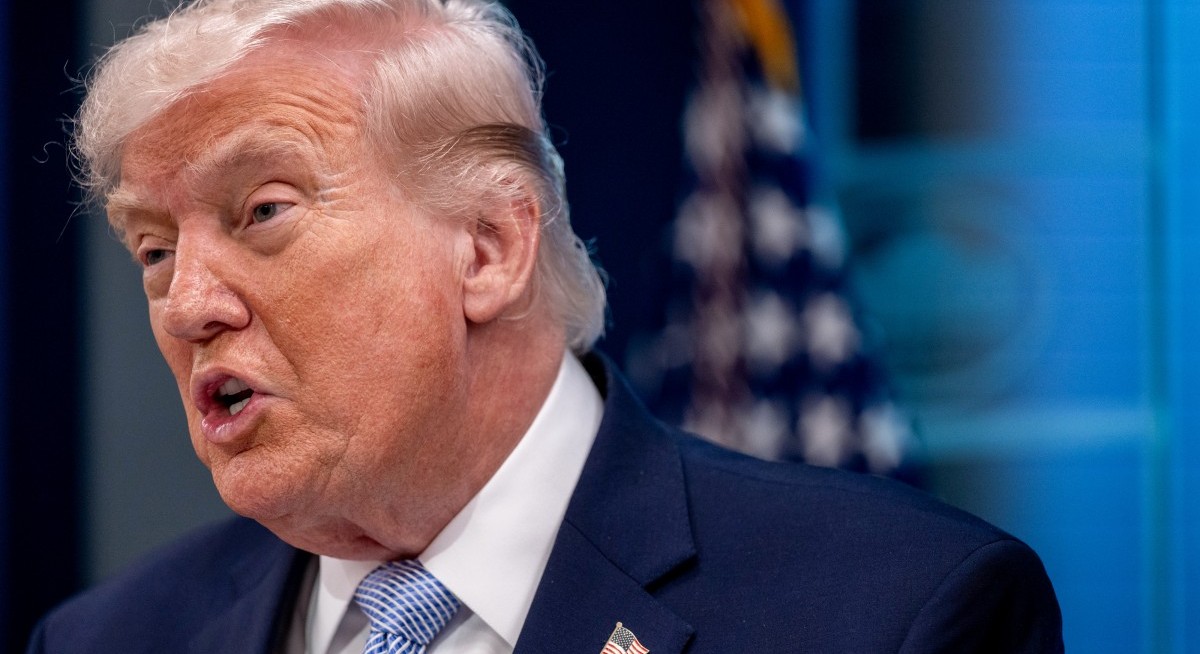


(April 8): The US and Iran agreed to a two-week ceasefire and Tehran pledged to reopen the Strait of Hormuz, a last-ditch deal that saw President Donald Trump back off from threats to escalate the war.
Trump announced the agreement on Tuesday night, shortly after mediator Pakistan implored him to rethink his deadline to unleash massive devastation on Iran if it didn’t meet his demands. While it wasn’t clear on Wednesday when the truce takes effect — with reports of ongoing hostilities rife across the Persian Gulf — the accord helped ease fears of a protracted global crisis.
Oil and gas prices plummeted on news of a deal, which paves the way for a resumption of energy supplies through Hormuz. The critical waterway — through which about fifth of oil and liquefied natural gas supplies typically flows — has been effectively shut for the duration of the near six-week conflict.
Brent crude fell as much as 16% before trading around $94 a barrel, while European natural gas futures posted their biggest decline in more than two years, shedding as much as 20%.
Trump said he agreed “to suspend the bombing and attack of Iran for a period of two weeks” as long as Iran agrees to “the complete, immediate, and safe opening of the Strait of Hormuz”.
His announcement represented a dramatic climb-down from an earlier warning that “a whole civilisation will die tonight, never to be brought back again” if Iran didn’t give in. His threatened attacks on Iran’s civilian infrastructure, including power plants, may have been considered war crimes if they were carried out.
See also: Starmer says Trump’s Iran rhetoric is contrary to UK values
Iranian Foreign Minister Abbas Araghchi said in a statement that “for a period of two weeks, safe passage through the Strait of Hormuz will be possible via coordination” with Iran’s military and that if attacks on its territory are halted, “our powerful armed forces will cease their defensive operations”.
Despite the agreement, Kuwait, Saudi Arabia, Bahrain and the United Arab Emirates, as well as Israel, reported missile and drone attacks by Iran after Trump’s announcement. Kuwait’s army on Wednesday said it’s still dealing with “intense” attacks.
The US expected orders to stand down from strikes would take time to reach Iran’s Islamic Revolutionary Guard Corps, Axios reported. Such lags are typical in conflicts, with hostilities often continuing before gradually tapering off.
See also: Australia turns to Asia for fuel, security as US ally distracted
Explosions occurred at Iran’s Lavan Refinery after the start of the truce, the semi-official Mehr reported, without saying where it got the information.
US Vice President JD Vance called developments in Iran “good” and said Trump has achieved the US’ military objectives in the country. However, the truce with Iran is “fragile”, he said in an interview in Budapest.
Both the US and Iran are portraying the ceasefire as a “victory”, but significant differences remain between their demands to bring the war to a complete end, according to Mona Yacoubian, a senior adviser with the Middle East Program at the Center for Strategic and International Studies.
“Iran says it will allow free passage for the next two weeks through the Strait of Hormuz, but in coordination with Iran’s armed forces. If the US agrees to that, that is a huge concession to Iran,” she said on Bloomberg TV.
Trump said the US would assist in restarting the flow of tanker traffic in the strait. He posted on social media that he envisions “big money” will be made and America will be “loading up with supplies of all kinds, and just ‘hanging around’ in order to make sure that everything goes well”.
Stocks rallied on the developments. MSCI’s Asia-Pacific Index jumped 5.1% to a five-week high and equity-index futures for Wall Street gauges rose more than 2.5%. Europe’s Stoxx 600 index surged 3.8%, the most since April last year.

To stay ahead of Singapore and the region’s corporate and economic trends, click here for Latest Section
While markets breathed a sigh of relief, the ceasefire addressed a crisis Trump helped create when the US and Israel launched the war in late February. It didn’t achieve his stated goals for limits on Iran’s nuclear, missile or drone programmes. And there was no indication the US was prepared to meet Iran’s desire for guarantees not to resume hostilities and the lifting of sanctions.
Pakistani Prime Minister Shehbaz Sharif, a key mediator, said Tehran, Washington and their allies had agreed to a complete ceasefire, including in Lebanon, where Israel is waging a parallel campaign against the Iran-aligned Hezbollah militia.
Israeli Prime Minister Benjamin Netanyahu disputed that, saying the temporary deal doesn’t extend to Lebanon.
Sharif invited all sides to Islamabad to continue negotiations. White House Press Secretary Karoline Leavitt said discussions about the next phase of talks are ongoing but “nothing is final”.
Iranian President Masoud Pezeshkian confirmed the Islamic Republic would participate, according to a statement by the Pakistan prime minister’s office.
The complete terms of a possible pact weren’t disclosed. Trump only said the US had received a 10-point proposal from Iran, describing it as “a workable basis on which to negotiate”.
Iran’s demands include its continued control of the Strait of Hormuz, acceptance of its nuclear-enrichment activities, the lifting of all primary and secondary sanctions, and a withdrawal of US combat forces from the region, according to a statement by its Supreme National Security Council carried by state media.
“It gives essentially a bit of a reprieve from the path of escalation they were on, but clearly we’re still far away from any kind of resolution to the conflict — much less the issues underlying the conflict,” said Michael Singh, who served as a senior director for the Middle East at the National Security Council during George W Bush’s US presidency.
Some of Trump’s biggest backers — and strongest proponents of the attacks — expressed caution about the agreement.
“We must remember that the Strait of Hormuz was attacked by Iran after the start of the war, destroying freedom of navigation,” Senator Lindsey Graham, the South Carolina Republican, said on X. “It is imperative Iran is not rewarded for this hostile act against the world.”
Much remains unclear about the ceasefire agreement. The two-week period can be extended by mutual agreement, though Iran will enter talks with “complete distrust”, its state media said.
The focus will be on Hormuz and whether ships can pass safely through the vital waterway. While some vessels have made it through the strait in recent weeks, they have generally not been from countries Iran views as hostile or having at least tacitly supported the US and Israeli strikes.
The first two ships to attempt an exit since the announcement appear to be sailing as a pair towards Iran’s Larak and Qeshm islands on Wednesday morning, ship-tracking data showed. They are the Tour 2, a US-sanctioned Suezmax that’s flagged to Iran, and NJ Earth, a Greek-owned bulk carrier.
Uploaded by Tham Yek Lee




