



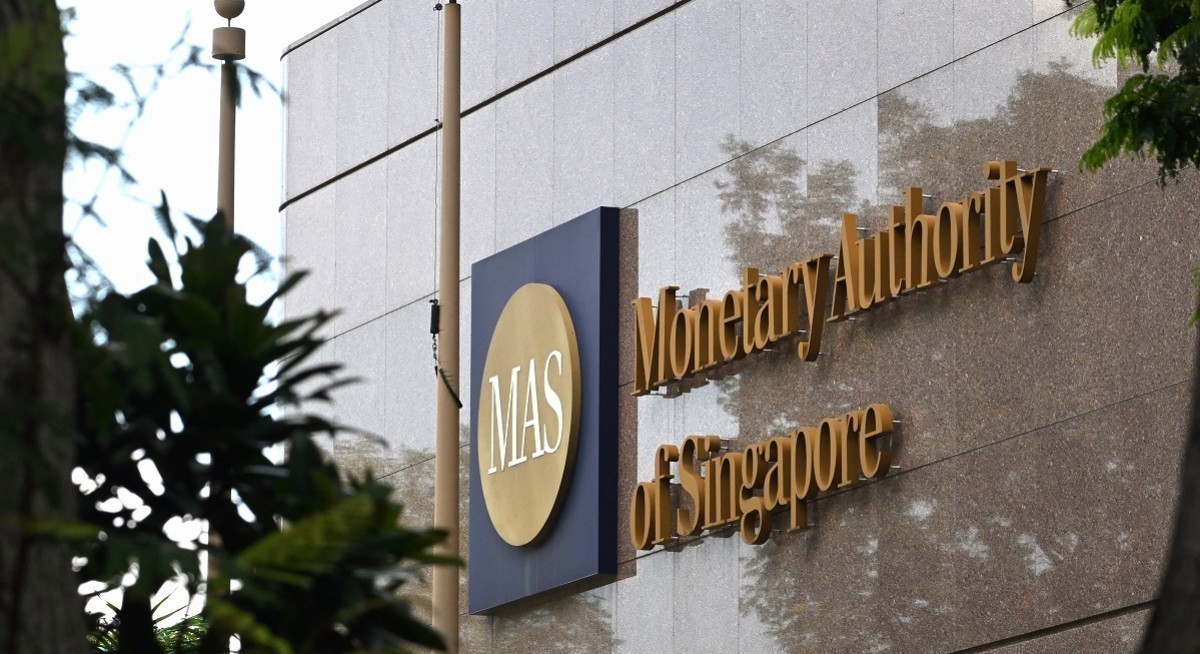



Singaporeans are well-known for doing well in examinations. If meeting emissions targets is seen in this light, then the Monetary Authority of Singapore (MAS) can be considered to have aced the exam, passing with flying colours.
For FY2025 ended March 31, 2026, MAS reduced its Scope 1, 2 and 3 (business air travel) emissions by 33% from its FY2018 baseline, and Scope 3 emissions from outsourced currency operations by 45%. These reductions exceed MAS’ respective targets of 17.5% and 10% for the two metrics by what can be considered a significant difference.
The central bank targets a 30% reduction in Scope 1, 2 and 3 (business air travel) and a 20% reduction in Scope 3 (outsourced currency operations) by FY2030.
Total scope 1, 2 & 3 emissions in FY2025 were approximately 11.8% y-o-y lower and 39.4% lower than in FY2018. For Scope 2, an upgraded chiller plant in Currency House drove a 12% y-o-y reduction. Meanwhile, less business air travel and other initiatives such as encouraging the use of Fit notes for festive gifting during Lunar New Year contributed to a decrease in Scope 3.
“As an organisation, MAS has reduced operational emissions relative to its FY2018 baseline,” says MAS chairman Gan Kim Yong.
Other than reducing emissions, MAS is also working towards GreenGov.SG’s reduction targets as an organisation. MAS aims to reduce its energy utilisation index and water utilisation index by 10% by 2030, relative to FY2018-2020 baseline average.
See also: UK apartment owners are getting locked out of money-saving green tech
It is more ambitious for the waste disposal index, targeting a 30% reduction by 2030 relative to FY2022 baseline. The average of FY2018 – FY2020 levels was adopted as the baseline for EUI and WEI to better reflect the hybrid working arrangements post-pandemic. For WDI, the baseline is set as FY2022 across the public sector.
For the reporting year, MAS’ EUI was 127.8 kWh/m2, or 11% lower than the baseline, while WEI was 85.3 litres/person/day, a 0.9% increase from the baseline.
WDI was 0.27 kg/person/day, a 27% decrease from the baseline. In total, MAS Building and Currency House disposed of a total of 123,945 kg of general waste, an 8.9% y-o-y decrease and 5.9% lower than the baseline.
Beyond becoming more sustainable itself, MAS works to enhance the sustainability of stakeholders — including listed companies, financial institutions (FIs) and fund managers — in Singapore’s financial ecosystem.
Initiatives include working with the Singapore Exchange (SGX) to implement the climate-relevant provisions of the IFRS Sustainability Disclosure Standards through the SGX Listing Rules in a phased manner; issuing guidelines to support FIs in building effective climate-related risk assessment and management capabilities and greater climate resilience; and updating its 2024 Information Paper on Good Disclosure Practices for Retail ESG Funds.




