



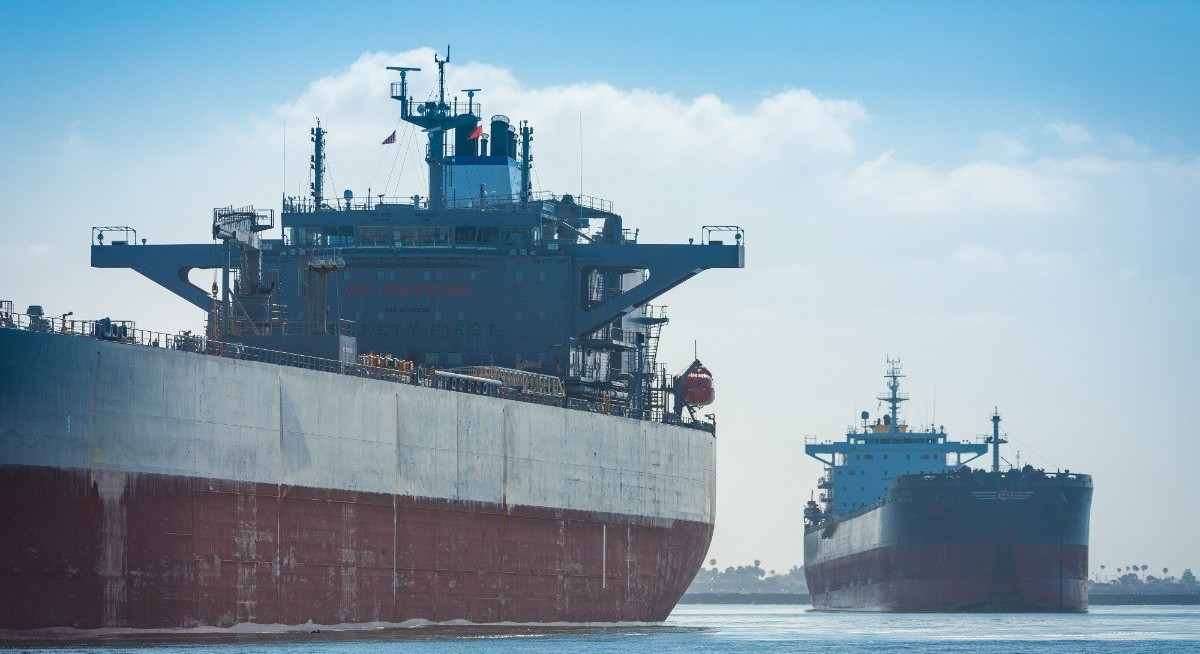



(July 17): The US launched fresh strikes against Iran as hostilities across the Middle East continued to escalate and shipping traffic slumped in the critical Strait of Hormuz.
American forces carried out a sixth consecutive night of strikes intended to degrade Iran’s ability to attack commercial shipping, hitting coastal surveillance and air defence sites, military logistics infrastructure and maritime assets, US Central Command said in a post on X late on Thursday.
Iran responded by attacking US bases in Kuwait, Jordan and Bahrain. The Kuwaiti Armed Forces said they intercepted 32 Iranian drones targeting “vital” institutions, with falling debris damaging residential areas.
Qatar, which has acted as a mediator in peace talks between Washington and Tehran, reported in a post on X that its armed forces intercepted missiles.
The Wall Street Journal reported that American forces struck multiple bridges to cut supply routes to an Iranian port city and naval base used to support attacks on ships in the Strait of Hormuz, citing an unnamed senior US official. The Associated Press later reported that the US expanded its air campaign early on Friday by striking additional bridges. There was no mention of bridge strikes in Central Command’s statement.

See also: US-Iran hostilities worsen as Hormuz shipping traffic falls
Global benchmark Brent rose to trade above US$85 ($110) a barrel, on track for a weekly gain of almost 12% as the exchange of attacks raised concerns about supplies.
Tehran has not backed down in the face of US President Donald Trump’s warning that he will escalate military strikes — including against Iranian power plants and bridges — until the Islamic Republic reopens the Strait of Hormuz, now the conflict’s focal point.
If the US does target Iranian infrastructure, “everything that has remained intact so far due to Iran’s nobility will be smashed to pieces — that is, all the infrastructure in the region”, the state-run Islamic Republic News Agency cited a spokesman for the country’s central military command as saying on Thursday.
See also: Iran sneaks out tankers via Hormuz as Trump amps up threats
Iran has also asked its Houthi allies in Yemen to close the Red Sea oil route if the US strikes Iran’s power network, Reuters reported, citing people familiar with the matter.
“As long as the US does not accept the Iranian legal system, this strait will remain closed,” a spokesman for Iran’s army said, according to a report from the semi-official Iranian Students’ News Agency. That was likely a reference to Tehran’s demand that ships seek its permission before sailing through Hormuz and abide by its rules, including the imposition of any service fees.

Observable commercial traffic through the strait was sparse, with transits largely limited to Iran-linked vessels using the northern route approved by Tehran, ship-tracking data compiled by Bloomberg showed. Even so, evidence continues to indicate that some oil cargoes are crossing without broadcasting their location.
Two supertankers carrying Saudi and Iraqi crude reappeared off Oman late Wednesday after going dark on tracking systems in the Persian Gulf over the weekend, indicating they likely completed the Hormuz passage earlier this week. Some Iranian tankers also changed course after the US resumed blockading its ships again this week.
The slowdown has pushed the seven-day moving average of crude oil flows, including Iranian supplies, through Wednesday down to about 5.5 million barrels a day, from around 9.4 million barrels a day the previous week, according to Bloomberg calculations based on vessel-tracking data and information from Kpler and Vortexa.
The US is increasingly frustrated with Iran’s willingness and ability to attack vessels in the Strait of Hormuz, a vital route for oil and liquefied natural gas supplies from Saudi Arabia, Iraq, Qatar and Iran. Washington and Tehran accuse each other of breaching the terms of an interim peace agreement, which was meant to reopen the strait but worded ambiguously as to how fast that would happen.
To stay ahead of Singapore and the region’s corporate and economic trends, click here for Latest Section
Since tensions escalated last week, the US has reimposed its blockade on Iranian ports and ended a waiver on oil sanctions, moves that threaten to further weaken Iran’s economy. The rial has fallen about 20% against the dollar over the past month, according to Bonbast.com.
US Vice President JD Vance, in an interview with podcaster Joe Rogan, rejected the idea that talks with Iran are futile and said Washington would not deploy ground troops to topple the government.
“We are not going to send 150,000 ground troops in order to accomplish a change in a regime unless the people on the ground themselves want to accomplish that outcome,” he said, referring to Iranians.
Iran’s parliamentary speaker and chief negotiator in the now-stalled peace talks with the US, Mohammad Bagher Ghalibaf, said his country had “no reason to remain committed” to an interim deal the two sides signed around a month ago. He stopped short, however, of saying Iran would formally withdraw from the so-called memorandum of understanding.
Early on Thursday, the US struck a supertanker near Iran’s Kharg Island export terminal after the Curacao-flagged “unladen” vessel ignored multiple warnings while heading towards an Iranian port. The latest US campaign has focused on radar, missile and drone facilities rather than the broader bombing seen in March and April.
“The ceasefire is over, with vessels under heavy Iranian fire,” RBC analysts including Helima Croft said in a note to clients. “We do not see Hormuz traffic returning to pre-war levels as long as shippers have to contend with the threat of mines, missiles, drones and Tehran tolls.”
Uploaded by Tham Yek Lee




