



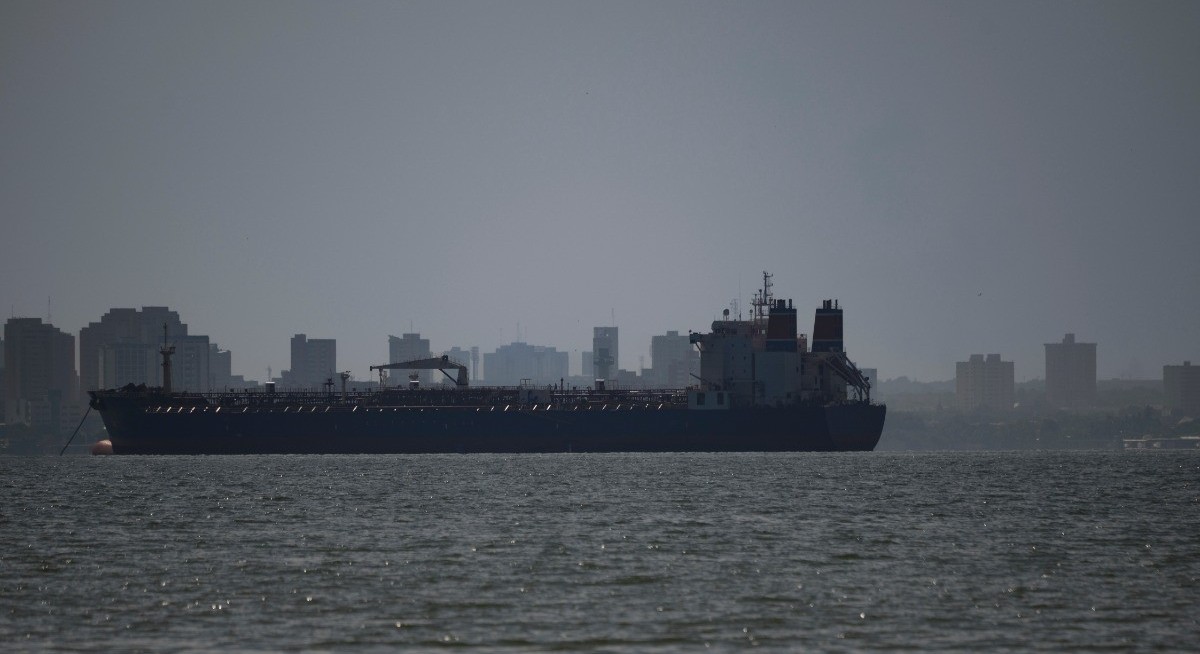



(July 14): Iran has reverted to its well-used tactic of going dark to move oil tankers through the Strait of Hormuz in recent days, even before the US said it would reimpose a blockade of the country’s ports.
Six US-sanctioned supertankers, capable of carrying a combined 12 million barrels of crude, have passed through the strait into the Gulf of Oman in the past week with their transponders turned off, according to ship-tracking data compiled by Bloomberg. The vessels, and other Iran-linked ships, made their journeys after Washington revoked temporary permission for Tehran to sell its oil on July 7.
The situation in Hormuz has since deteriorated further with the White House to reinstate its blockade from 4pm Washington time on Tuesday and President Donald Trump demanding a 20% reimbursement on cargoes that go through the waterway with US support, without giving details.
Tehran’s change in approach comes as its ceasefire with Washington looks increasingly untenable. Iranian tankers began openly signalling their journeys a month ago, in the midst of negotiations to end the war, but optimism the conflict was winding down has now faded.

Observable traffic in Hormuz had all-but ceased early on Tuesday, ship-tracking data showed. A bulk carrier was headed for Sharjah in the United Arab Emirates after passing through the strait and into the Persian Gulf, while two liquefied petroleum gas (LPG) carriers were approaching the waterway in the opposite direction in order to leave the gulf.
See also: US hits Iran with strikes, blockade as Trump plans Hormuz charge
It is possible there are other non-Iranian vessels crossing Hormuz with their transponders turned off. So-called dark transits have outnumbered visible ones over the last few days. However, attacks on ships by both Iran and the US are making these journeys increasingly risky.
On top of the six Iranian supertankers, a seventh has left Jask, an Iranian port that sits outside Hormuz on the Gulf of Oman. Other US-sanctioned ships with links to Tehran, including oil tankers, LPG carriers and container ships have exited Hormuz since July 7. They are part of a flood of 57 million barrels of crude that Iran has managed to ship out between the two US naval blockades.
Uploaded by Tham Yek Lee




