



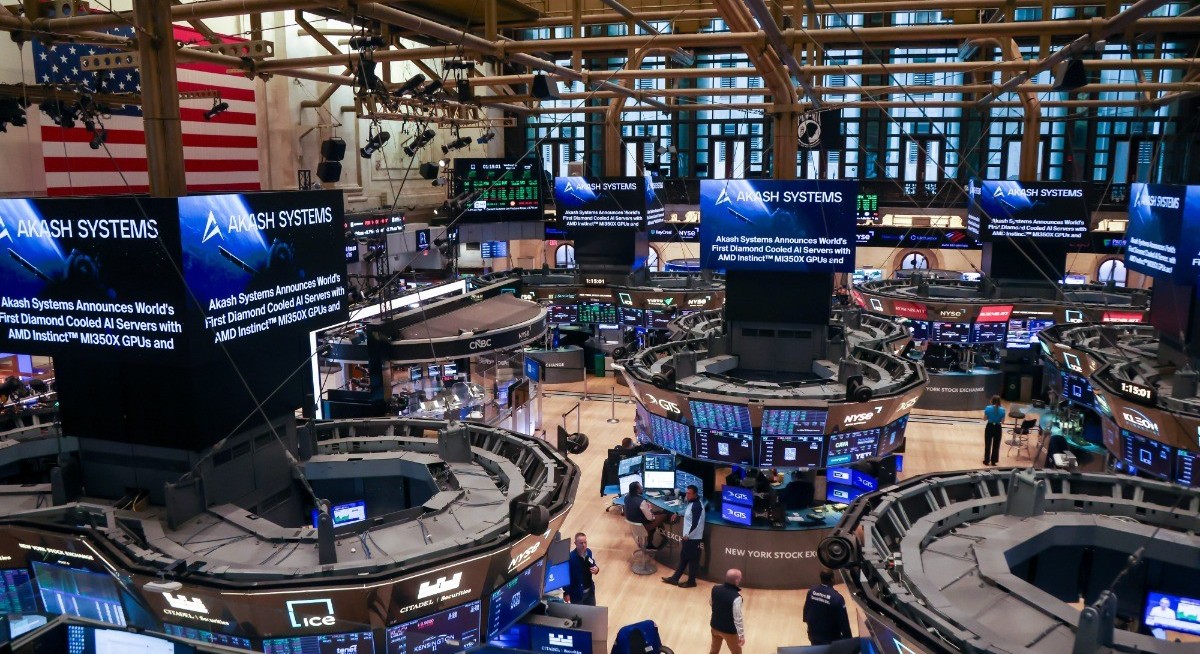


(March 12): A renewed oil spike stoked fears the war in Iran will further crimp energy supplies and fuel inflation, spurring a slide in stocks, which were also hit by signs of distress in the US$1.8 trillion private-credit market.
Brent hit US$100 amid widening shipment disruptions, with Iran’s new supreme leader, Ayatollah Mojtaba Khamenei, signalling no intention of ending the Strait of Hormuz closure. The S&P 500 lost 1.2%. Banks sank as redemption requests from private-credit funds forced Morgan Stanley and Cliffwater LLC to cap withdrawals. Deutsche Bank AG flagged a US$30 billion exposure to the sector.
As investors grow uneasy about the potential cost of the war, long-term debt has underperformed on worries budget deficits will widen. More broadly, global bonds surrendered their 2026 gains. The dollar rose to an almost two-month high.
The Trump administration plans to issue temporary waivers for a century-old maritime law requiring American-built ships be used to transport goods between US ports to stop surging oil prices, according to people familiar with the matter.

The US Navy could start escorting tankers through the Strait of Hormuz by the end of this month, Energy Secretary Chris Wright told CNBC.
See also: Dick’s expects 2-4% sales growth at namesake stores, Foot Locker
“As long as the bottlenecks around the Strait continue, oil prices will remain elevated, raising the risk that the conflict makes its mark on the economy,” said Bespoke Investment Group strategists.
Goldman Sachs Group Inc warned that oil prices could exceed the 2008 peak if flows via Hormuz remain depressed through March. Brent rallied to a high of US$147.50 a barrel that year on surging demand and stagnating supply.

See also: Stocks churn on war jitters as oil keeps rallying
The Iran war is causing unprecedented turmoil in oil markets, hitting 7.5% of global supply and an even bigger swath of exports, the International Energy Agency said.
“The number one issue facing the markets right now is obviously the war,” said Matt Maley at Miller Tabak. “The conflict in the Middle East is not abating. This caused crude oil to spike. We also have the issue of the growing stress on the credit markets.”
If history is any guide, retreating from markets during periods of heightened volatility is unlikely the best strategy over the long term, according to Ulrike Hoffmann-Burchardi at UBS Global Wealth Management
“But we believe holding sufficient liquidity to cover foreseeable expenses can help investors avoid forced selling in the event of a market drawdown,” she said.
Despite all the concerns about the impacts of the war on the economy, the latest readings haven’t been enough to drive the market’s focus away from broader geopolitical issues.
Still, traders are gearing for Friday’s inflation report — the Federal Reserve’s preferred price gauge — ahead of next week’s monetary policy decision.
“Once again, the risks to the data could be asymmetric,” said Kyle Rodda at Capital.com. “A benign print will be business as usual. A hot print will raise fears of rising inflation going into the inflationary impacts of an energy crisis.”
To stay ahead of Singapore and the region’s corporate and economic trends, click here for Latest Section
Some of the main moves in markets:
Stocks
- The S&P 500 fell 1.2% as of 10.55am New York time
- The Nasdaq 100 fell 1.4%
- The Dow Jones Industrial Average fell 1.2%
Currencies
- The Bloomberg Dollar Spot Index rose 0.4%
- The euro fell 0.4% to US$1.1524
- The British pound fell 0.4% to US$1.3361
- The Japanese yen fell 0.1% to 159.17 per dollar
Cryptocurrencies
- Bitcoin fell 1.7% to US$69,479.45
- Ether fell 1.3% to US$2,042.14
Bonds
- The yield on 10-year Treasuries was little changed at 4.23%
- Germany’s 10-year yield was little changed at 2.94%
- Britain’s 10-year yield advanced eight basis points to 4.77%
Commodities
- West Texas Intermediate crude rose 9.7% to US$95.68 a barrel
- Spot gold fell 0.7% to US$5,140.52 an ounce
Uploaded by Felyx Teoh




